Are Facebook ads worth it for a small business?
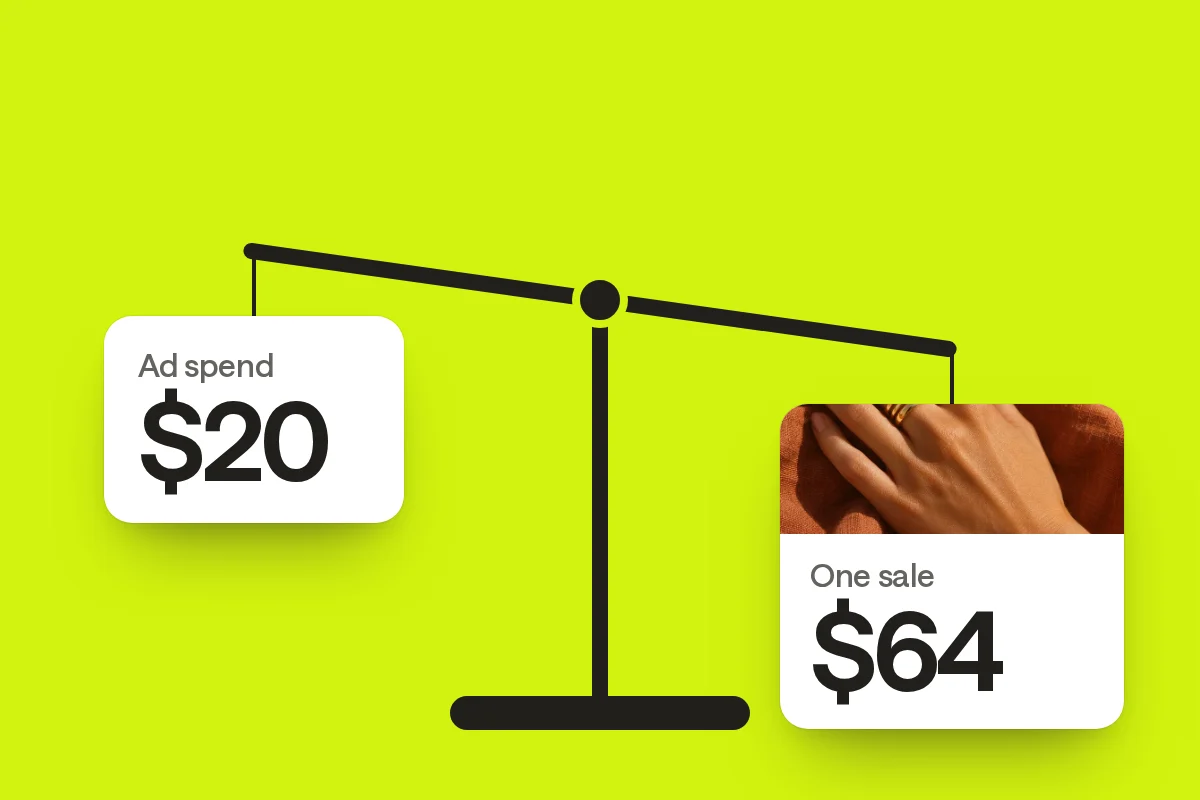
Facebook ads are worth it when the profit you keep from one sale is bigger than what it costs to get that sale. Triple Whale's data puts Meta's median cost per acquisition at $39.24. Shops with healthy margins, eye-catching products or repeat buyers have the best odds. Run the math below before you spend.

When Facebook ads tend to be worth it
- Each sale leaves real profit. Triple Whale's CPA benchmarks put Meta's median cost per acquisition (what you pay in ads for one sale) at $39.24, based on its data from September 2025 to August 2026. If you keep $50 on an order, you have room. If you keep $8, you don't.
- Your product sells on looks. Ads appear while people scroll, so the picture has to do the selling. Shopify says Facebook suits building interest in visual products and reaching impulse buyers.
- Customers come back. Triple Whale notes that subscription brands with strong retention can be profitable at a 2.5:1 return, because they know customers stick around. A coffee or pet food brand whose buyers reorder can afford to lose a little on the first order.
- One customer is worth a lot. A roofer or a wedding photographer can pay far more for a lead than a shop selling $15 socks.
When they usually aren't worth it
- Thin margins on cheap items. Triple Whale shows how fast this goes wrong: a $150 product at a 25% margin leaves $37.50 of gross profit, so a $50 cost per sale loses $12.50 on every order.
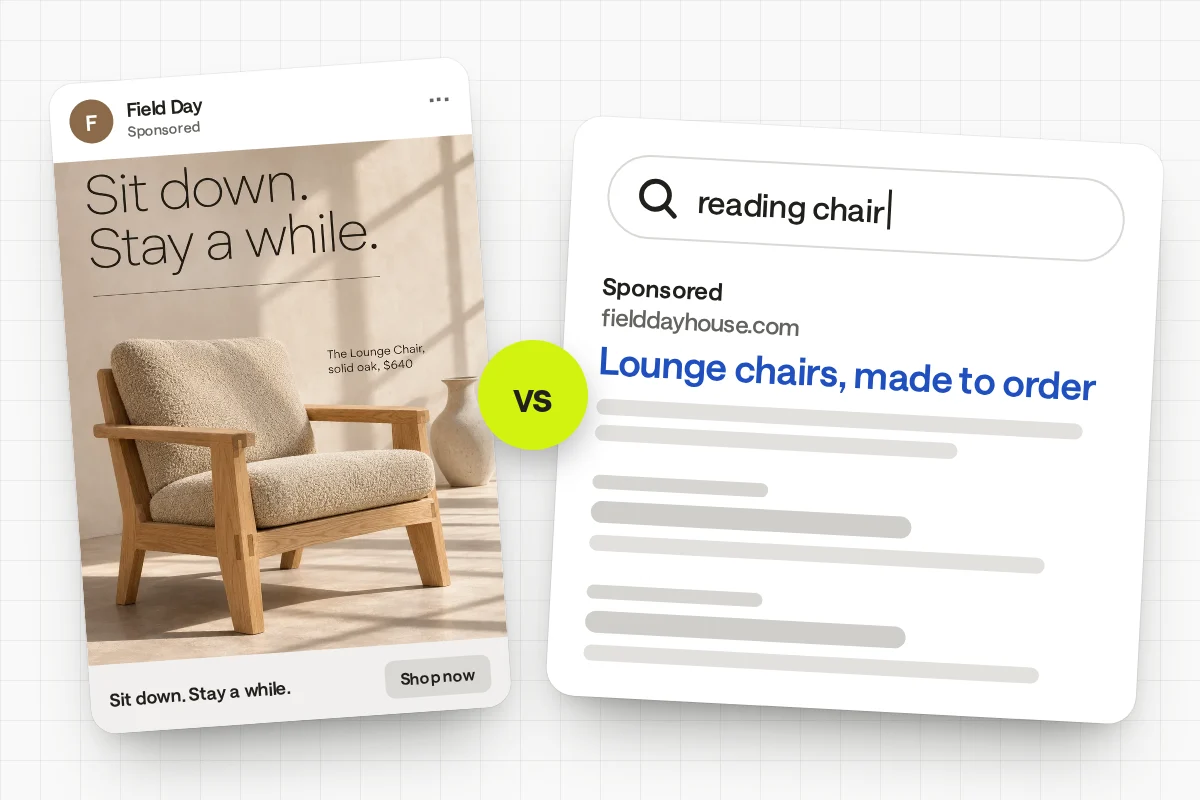
- People search for what you sell. Shopify says that for practical items like space heaters or home security systems, Google usually works better. Our Facebook ads vs Google ads comparison covers that choice.
- Your site can't close the sale. Ads bring visitors. A slow page, a missing price or a clunky checkout wastes them. Fix that first with our ecommerce conversion rate guide.
- You need results this week. Meta's delivery system needs time to learn, and early results are less stable (more on that below).
Do the math first: your break-even cost per sale
Your break-even cost per sale is the most you can pay in ads for one order without losing money on it.
- Start with your average order value.
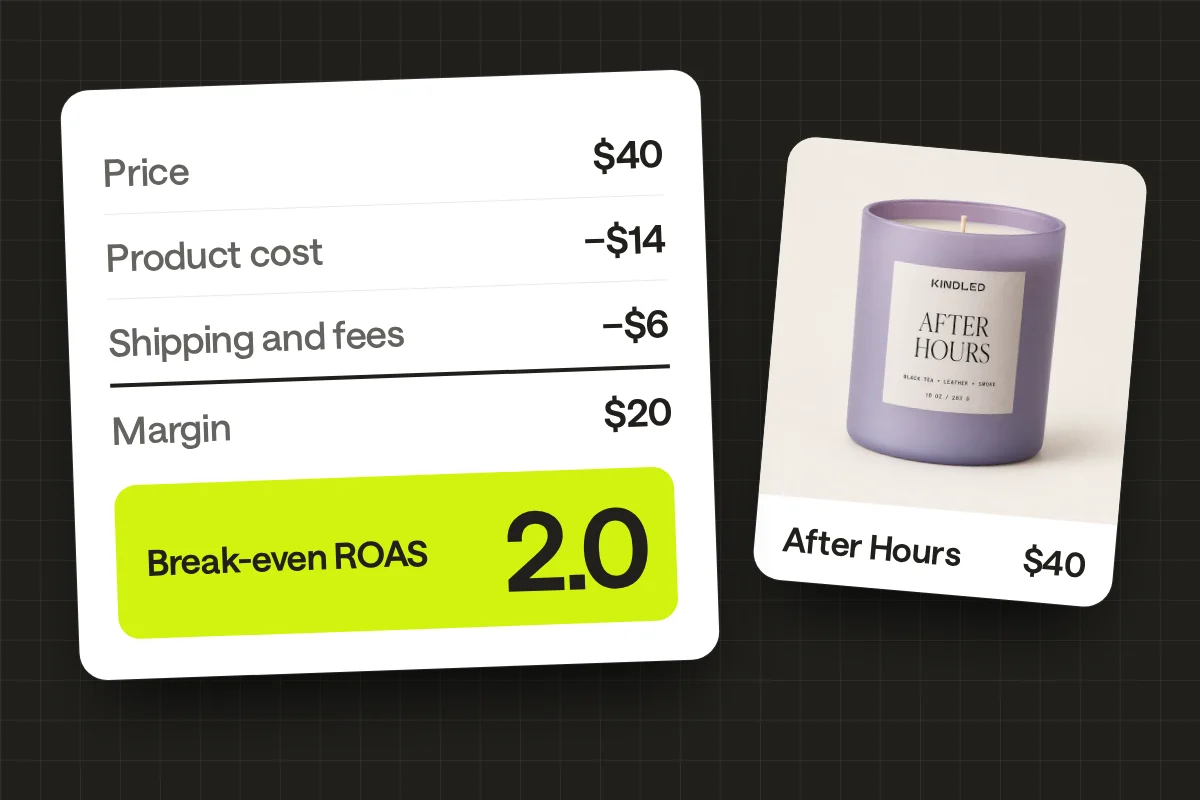
- Subtract every cost that comes with that order. Shopify's break-even guide lists the cost of goods, shipping, payment processing fees and pick and pack fees, and leaves out fixed costs like rent and salaries.
- What's left is your break-even cost per sale.
- Compare it with the Triple Whale median above. Far below it means a hard road. Above it means you have room to test.
Example: an invented dog treat brand
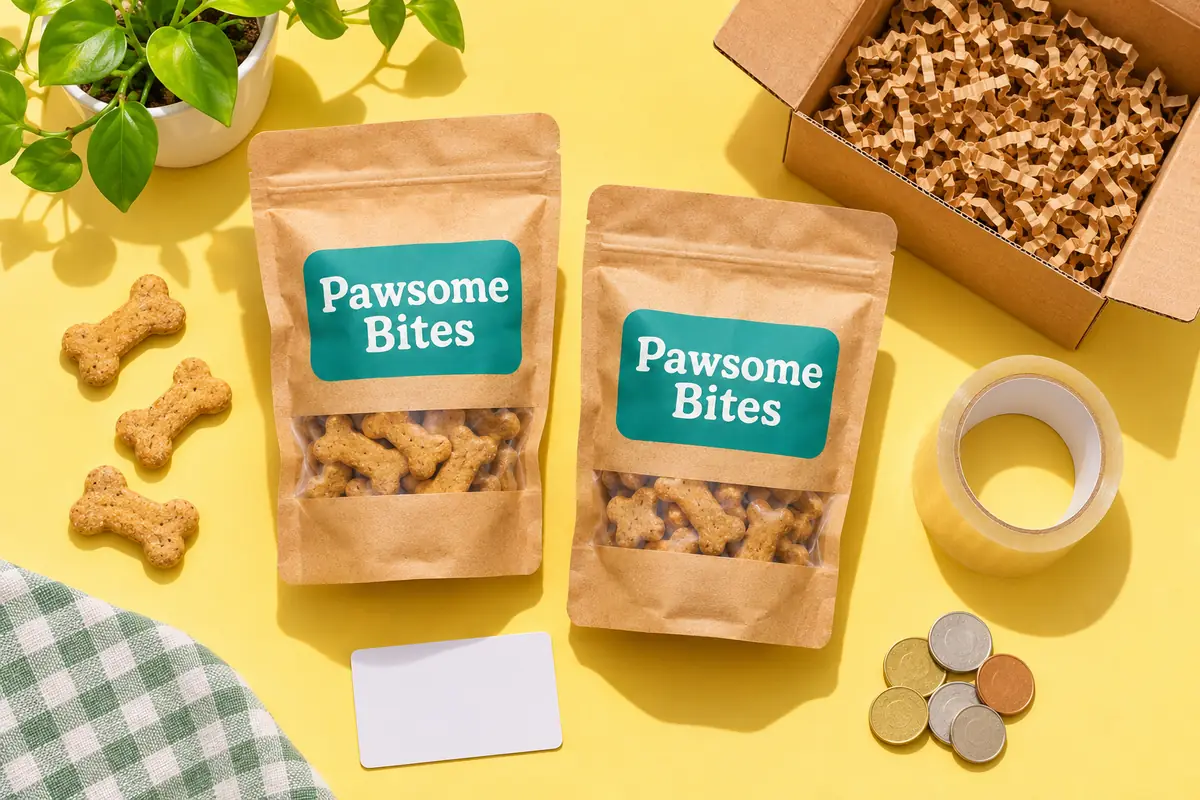
Pawsome Bites sells treat bags for $28, and the average order is two bags, so $56. The treats and packaging cost $14, shipping costs $8 and payment fees run about $2. That leaves $32 per order. Any order that costs more than $32 in ads loses money on day one.
Two things can change the answer. A three-bag bundle raises the order and the profit on it. And if many buyers reorder every month, you can afford a small loss on the first sale. If you think in ROAS (revenue divided by ad spend), our break-even ROAS guide converts the same numbers.
How much to spend on a test, and for how long
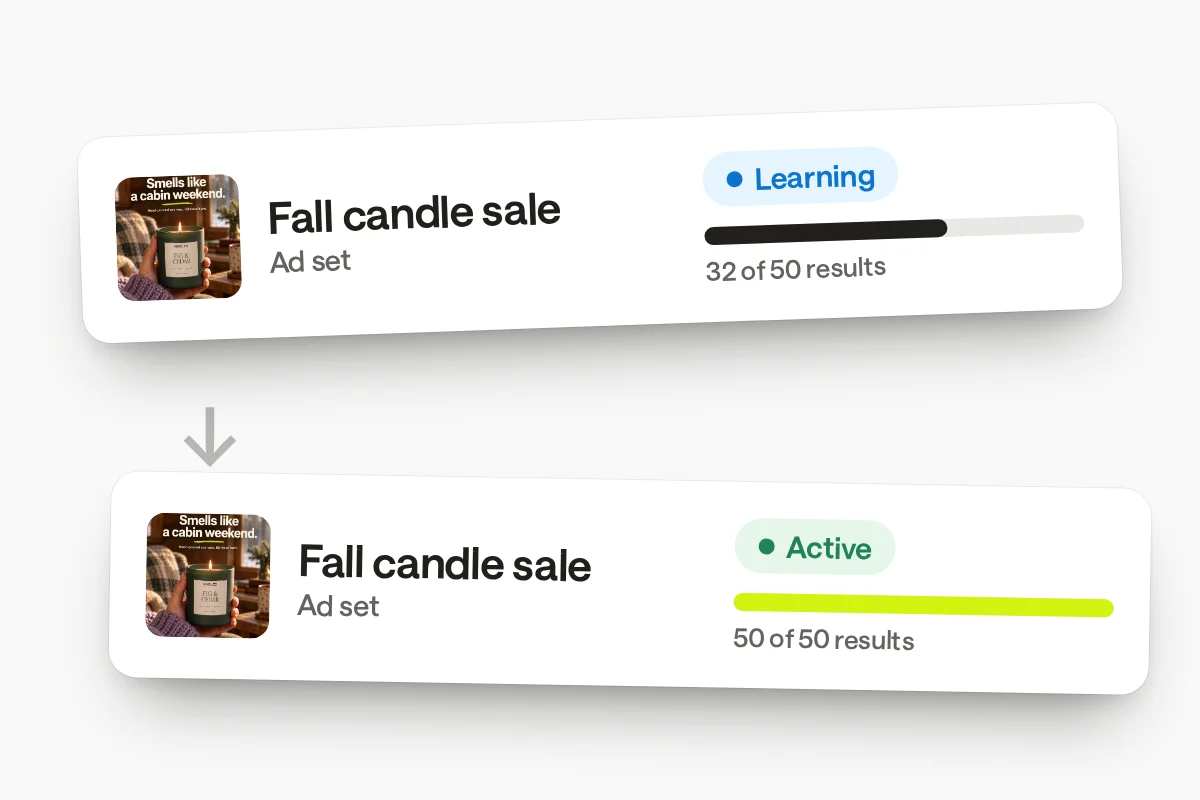
Meta's learning phase page says an ad set usually leaves learning after about 50 results in the week after its last significant edit. While it learns, performance is less stable and cost per result is usually higher. At $32 a sale, 50 sales a week means $1,600 a week, which is more than most small shops can risk.
A smaller test can still tell you a lot. An example plan:
- Pick an amount you can afford to lose, such as $20 a day for three weeks, about $420 in total.
- Run one campaign with one ad set and three to five different ads, so the money isn't split.
- Leave it alone for the first week. Meta advises waiting to edit until the ad set is out of learning.
- At the end, compare your cost per sale with your break-even number.
If an ad set shows Learning limited, Meta means it isn't getting enough results to finish learning. Our learning phase guide covers the fixes, and Facebook ads budget covers sizing.
How to read your test results
- Cost per sale below break-even. Keep going and raise the budget in small steps. See how to scale Facebook ads.
- Plenty of clicks, few sales. The ad is doing its job, so check price, shipping cost and checkout. Our guide to Facebook ads that aren't converting has a checklist.
- Few clicks. The ad isn't stopping the scroll. Try new images, a new first line or a short video before you give up on the channel.
- Cost per sale far above break-even with good ads and a good page. Facebook may not fit this product at this price.
Keeping the cost of a test down
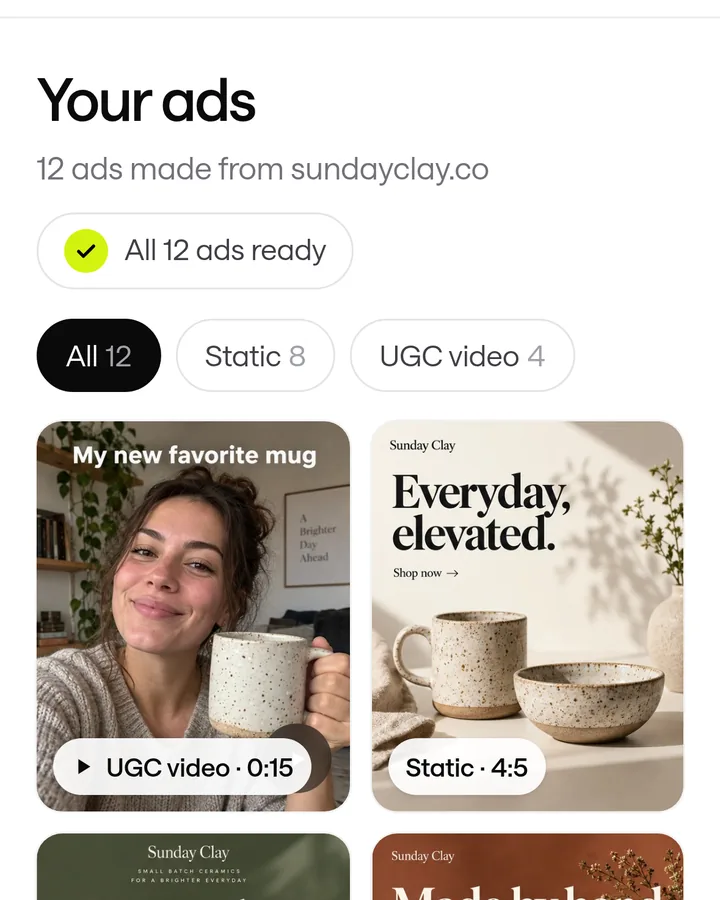
Fresh ads are a cost of testing that people forget. ScaleShot's Ads Agent makes image ads and video ads from 4 to 10 seconds long, and can write a plan for what to try. With a connected Meta ad account, it launches Sales, Leads or Visitors campaigns. Plans start at $19.95 for the first 2 weeks, then $42 every 2 weeks, and Meta bills your ad spend separately. If you'd rather hand it off, see what a Facebook ads agency costs.
Questions about whether Facebook ads pay off
How long do Facebook ads take to work?
Meta says the learning phase usually ends after about 50 results in the week after the last significant edit, and results are less stable until then. Most small shops should give a test a few weeks before judging it.
Is $500 enough to test Facebook ads?
It can give you a first read, especially on clicks and leads. Divide $500 by your break-even cost per sale to see how many sales it must bring in to pay for itself.
Are Facebook ads worth it for a service business?
Often, because one client can be worth hundreds of dollars. WordStream's 2025 benchmarks put the average Facebook cost per lead at $27.66, so check how many leads you need to win one job. Our lead ads guide shows the setup.
Do Facebook ads work for cheap products?
Only when bundles or repeat orders lift the profit per customer. A few dollars of profit per order rarely covers the ad cost of a sale.
ScaleShot TeamWe build ScaleShot, an AI ad tool for small businesses on Facebook and Instagram. How we make our guides
Sources
- What is a good CPA? Benchmarks by industry and channel in 2026, Triple Whale
- About the learning phase, Meta Business Help Center
- Facebook Ads Benchmarks 2025, WordStream
- Google Ads vs Facebook Ads: Which Is Better? (2025), Shopify
- Break-Even ROAS Calculator: How To Measure Break-Even ROAS (2026), Shopify