Facebook ads vs Google ads: which is better for a small business?
Google ads win when people already search for what you sell, and Facebook ads win when they need to see it first to want it. A plumber or a space heater store usually starts on Google. A candle shop or a dog treat brand with eye-catching products usually starts on Facebook and Instagram. Test one before adding the other.

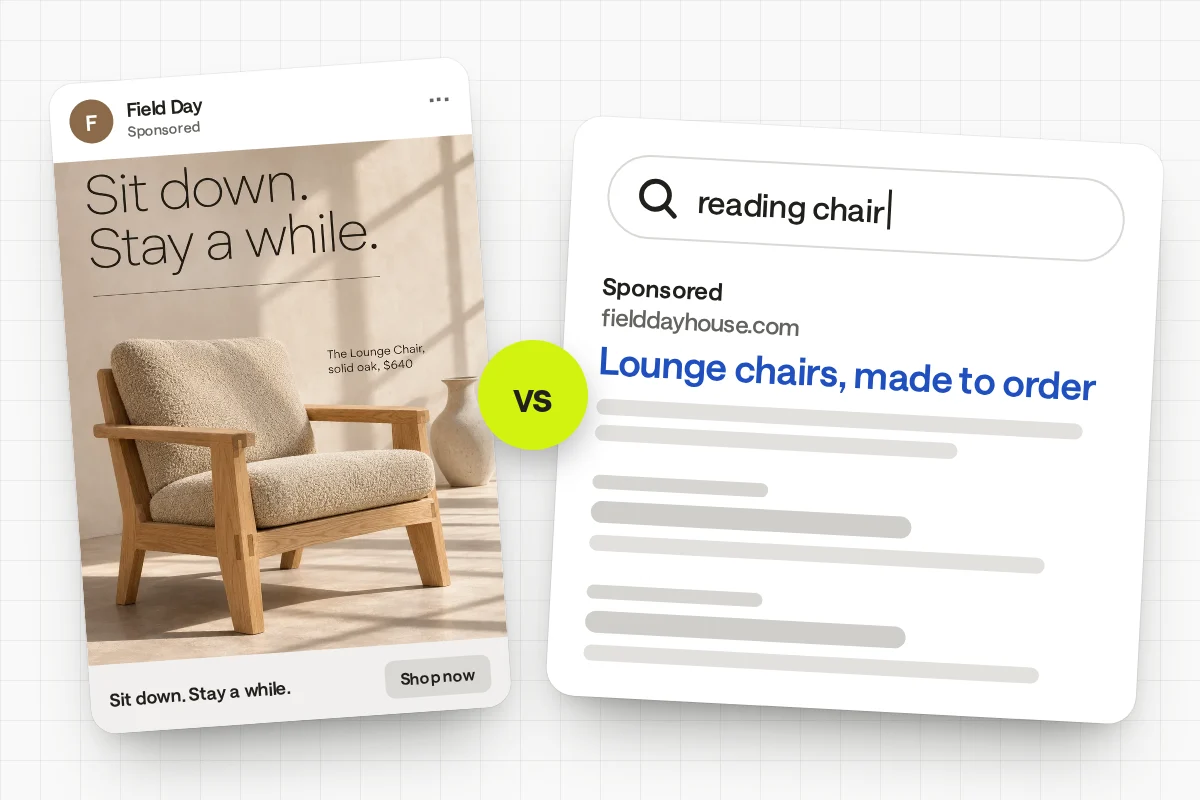
The core difference: searching vs scrolling
Google Search ads appear when someone types a search. Google matches your ad to those searches through keywords, which are the words or phrases you pick. You can add negative keywords so your ad only shows on the searches you want. Marketers call this demand capture: the person already wants a plumber today, and your ad is there when they look.
Facebook and Instagram ads appear while people scroll their feed. Nobody typed anything. Meta's About Advantage+ audience page says its AI finds the audience using signals such as past conversions, Meta Pixel data and interactions with your earlier ads. (The pixel is a snippet of code on your site that reports visits and sales back to Meta.) This is demand creation. Your ad has to make someone want a thing they weren't shopping for.
Shopify's comparison sums it up the same way: choose Google when customers are actively searching for what you sell, and Facebook to create demand.
What each one costs: 2025 benchmarks
WordStream's 2025 Google Ads benchmark report, built from 16,446 US search campaigns, puts the average cost per click at $5.26 and the average cost per lead at $70.11. Its 2025 Facebook report, covering US campaigns that ran between April 2024 and June 2025, puts the average click on a traffic campaign at $0.70 and the average lead at $27.66. Facebook's cost per lead rose about 21% on the year before and still came in well under Google's.
A cheap click is only half the story. A Google click comes from someone who searched, so it tends to sit closer to a purchase. In the same Google report, the average conversion rate (the share of clicks that turn into a lead or sale) is 7.52%. Compare the cost of a sale or a lead in your own account, never the cost of a click.
Neither platform charges a monthly fee. Google says it has no flat fees or subscriptions, and Search ads are paid per click. On a busy day Google may spend up to two times your daily budget, but never more than your monthly limit. For Meta's side, see how much Facebook ads cost.
Which one fits your business
Start with Google if
- People search for you in a hurry. Plumbers, locksmiths and roofers get calls from people typing "near me" with a problem right now. Google's Local Services Ads charge for valid leads instead of clicks.
- You sell practical things people look up by name. Shopify gives space heaters and home security systems as examples where Google usually works better.
- Your store already has steady traffic. Shopify suggests established stores move more budget into Google Search and Shopping ads to catch purchase-ready clicks.
Start with Facebook and Instagram if
- Your product sells on looks. Candles, jewelry, clothing and pet treats fit here. Shopify says Facebook suits building interest in visual products and reaching impulse buyers.
- Nobody knows your brand yet. People can't search for a name they have never heard.
- You want leads at a lower price. In WordStream's 2025 data, the average Facebook lead cost well under half the average Google lead.

Two example shops, side by side
These two businesses are invented examples.
Wick & Pine, a candle shop selling $32 soy candles. Nobody searches for "Wick & Pine" yet, and generic searches like "soy candle" are crowded with big brands. A 10-second video of a candle being lit in a cozy room, shown to people on Instagram, can make someone want one they weren't looking for. Facebook and Instagram come first.
Dave's Plumbing, a two-person plumber. When a pipe bursts at 9 p.m., the customer grabs a phone and searches "emergency plumber near me." Dave wants to be at the top of that page. Google comes first, and Local Services Ads let him pay for valid leads.
Later, each can add the other. Once people start searching for Wick & Pine by name, a small Google campaign on that name catches them. Dave can run Facebook ads in the fall offering a water heater check before winter.
How to start with one platform
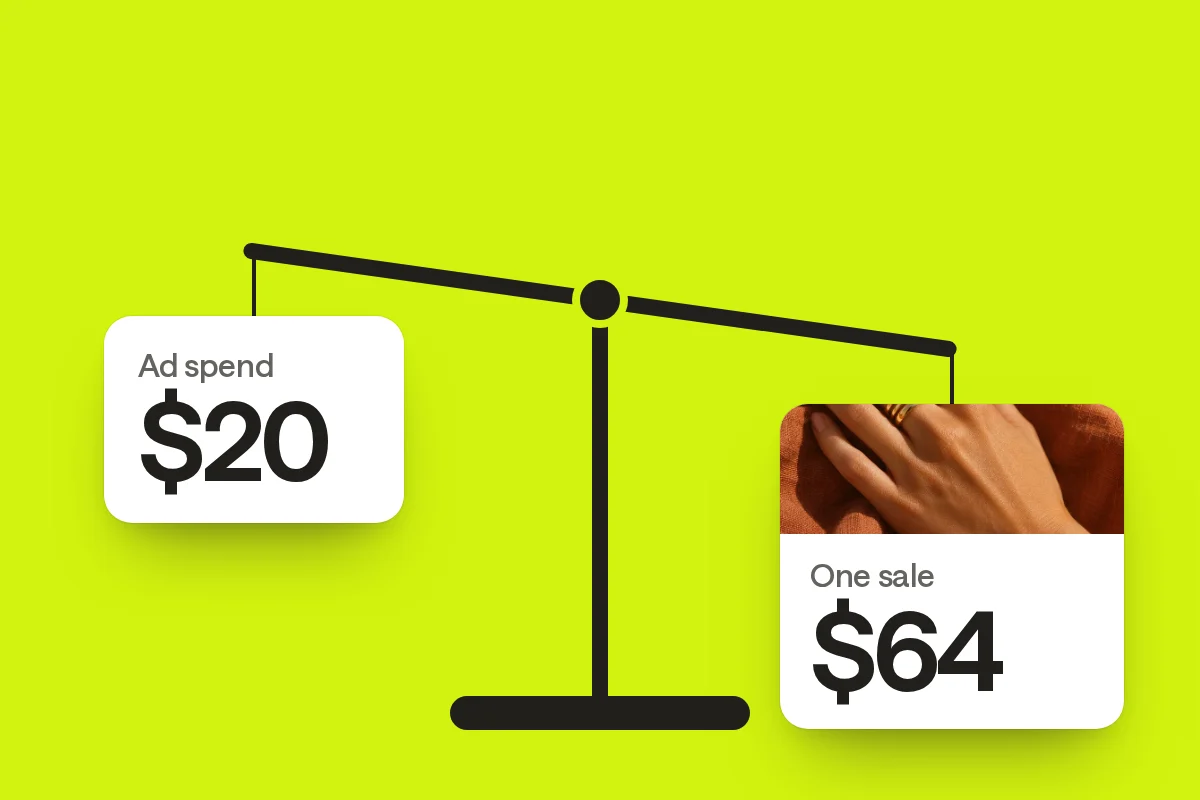
- Work out what a sale or lead is worth to you before you spend. Our break-even ROAS guide walks through the math.
- Pick the platform that matches how your customers find you, using the lists above.
- Set a daily budget you can afford to run for a few weeks. Our Facebook ads budget guide shows how to size it.
- Set up tracking so you can see sales or leads: the Meta Pixel for Facebook, or Google's conversion tracking for Google.
- Judge results on cost per sale or cost per lead, then decide whether to add the second platform.
Shopify's suggested split for a new store is 60% to 70% of the budget on Facebook for awareness and traffic, with 30% to 40% on Google for brand-name searches and retargeting. On a small budget, running one platform well usually teaches you more than splitting a little money two ways.
Where ScaleShot fits in
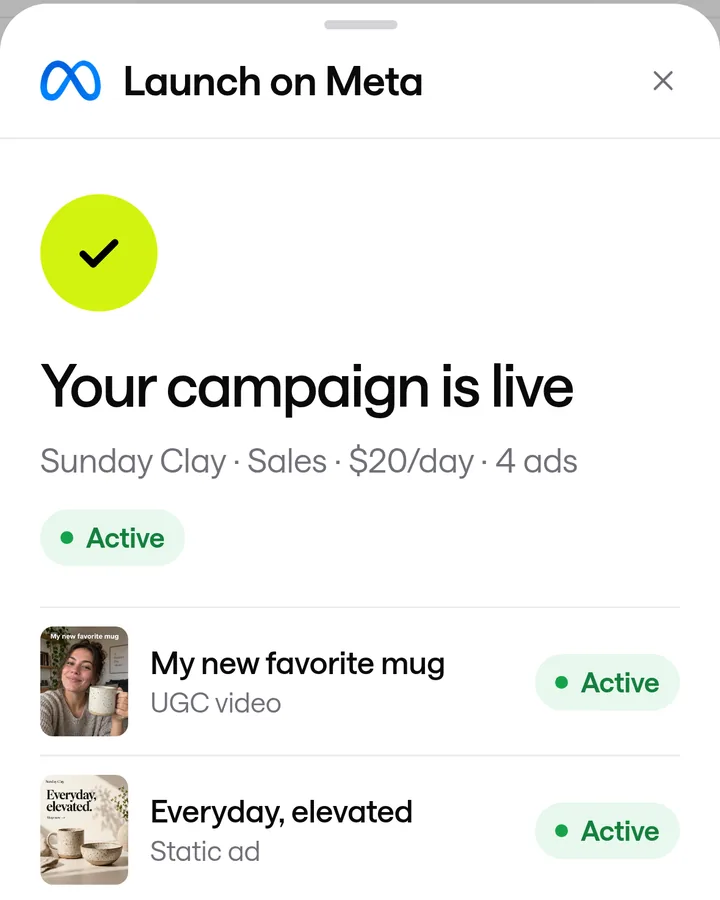
ScaleShot runs Meta ads, so it covers the Facebook and Instagram side of this decision. It reads your brand from your website, makes image and video ads, then creates and manages campaigns in your own Meta ad account. You pick a goal of Sales, Leads or Visitors and a daily budget. If your business belongs on Google first, set that up in Google Ads directly.
Facebook ads vs Google ads questions
Are Facebook ads cheaper than Google ads?
Per click and per lead, yes, in WordStream's 2025 reports for both platforms. A cheaper click can still cost more per sale if fewer of those people buy, so compare cost per sale.
Can I run Facebook and Google ads at the same time?
Yes. Shopify's view is that Facebook introduces your brand and Google closes the deal when someone searches for what you offer. On a tight budget, get one working before you add the second.
Do Google ads have a monthly fee?
No. Google says Google Ads has no flat fees or monthly subscriptions, and you set an average daily budget.
Which is better for a local service business?
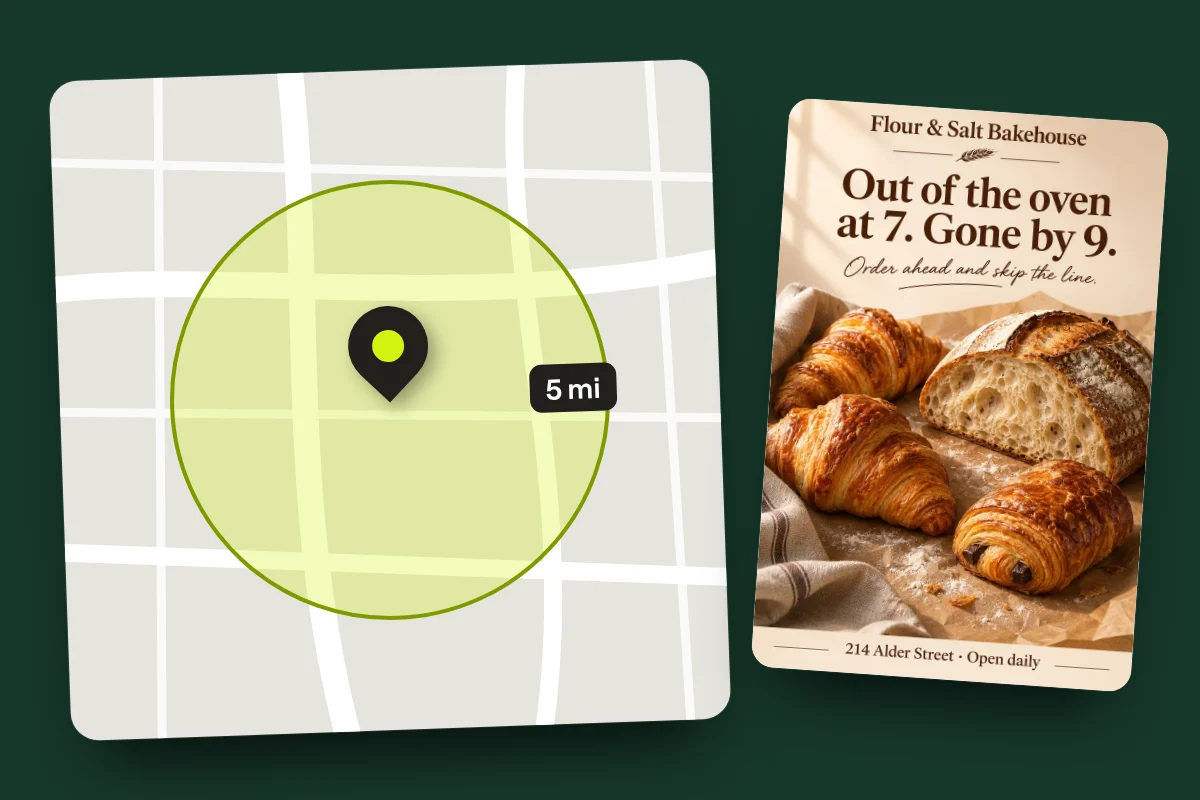
If customers search when they need you, Google usually comes first, and Local Services Ads charge for valid leads. For offers you want neighbors to notice, like a seasonal special, see Facebook ads for local businesses.
ScaleShot TeamWe build ScaleShot, an AI ad tool for small businesses on Facebook and Instagram. How we make our guides
Sources
- Facebook Ads Benchmarks 2025, WordStream
- 2025 Google Ads Benchmarks, WordStream
- About keywords in Search Network campaigns, Google Ads Help
- How much does Google Ads cost?, Google
- About Advantage+ audience, Meta Business Help Center
- Google Ads vs Facebook Ads: Which Is Better? (2025), Shopify
- How leads work, Google Local Services Help