How to write Facebook ad copy, step by step
Put your offer and the reason to care in the first line of primary text, then use the headline to name the product or deal. Meta recommends 50 to 150 characters of primary text and a 27-character headline for Feed image ads. Pick the call to action button that matches the next step.

The four parts of a Facebook ad
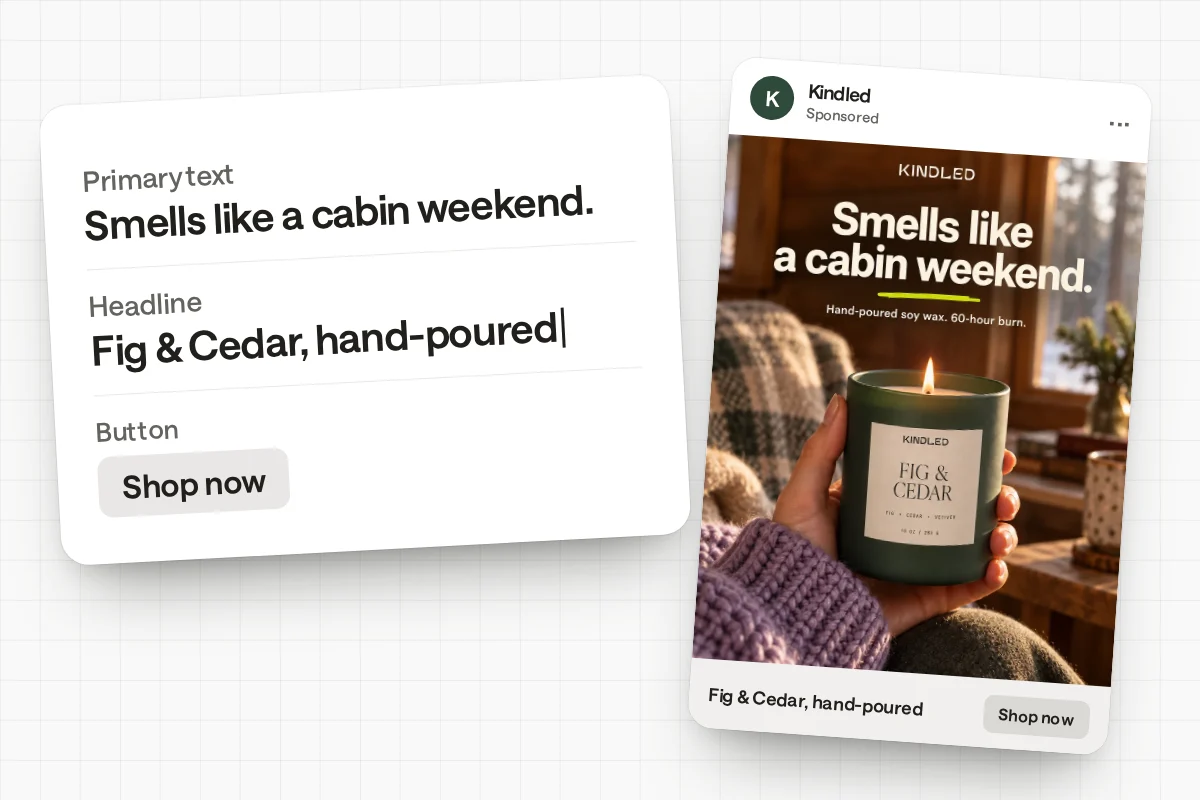
Every Feed ad has the same text slots around the image or video.
- Primary text sits above the image. It does most of the selling. Meta's ads guide recommends 50 to 150 characters for it.
- Headline is the bold line under the image, next to the button. Meta recommends 27 characters.
- Description is a smaller line under the headline. Jon Loomer notes it won't always appear, so never put anything important there.
- Call to action button is a label you pick from a list, such as Shop Now or Learn More.
The image or video does the stopping. The text tells people what it is and what to do next.
Where Facebook cuts off your text
Primary text in the Facebook Feed gets cut off after about 125 characters, and the headline after about 25, according to Jon Loomer's character limit guide. Anything past that hides behind a tap. On Instagram Feed, only up to two lines of primary text show.
So write the first 125 characters as if they are the whole ad. The rest is for people who are already interested: details, a review, shipping info.
Check the preview in Ads Manager before you publish. It shows each placement, and a line that reads fine on desktop can break badly on a phone.
A fill-in formula for Facebook ad copy
Use this as a starting draft, then cut words.
Primary text
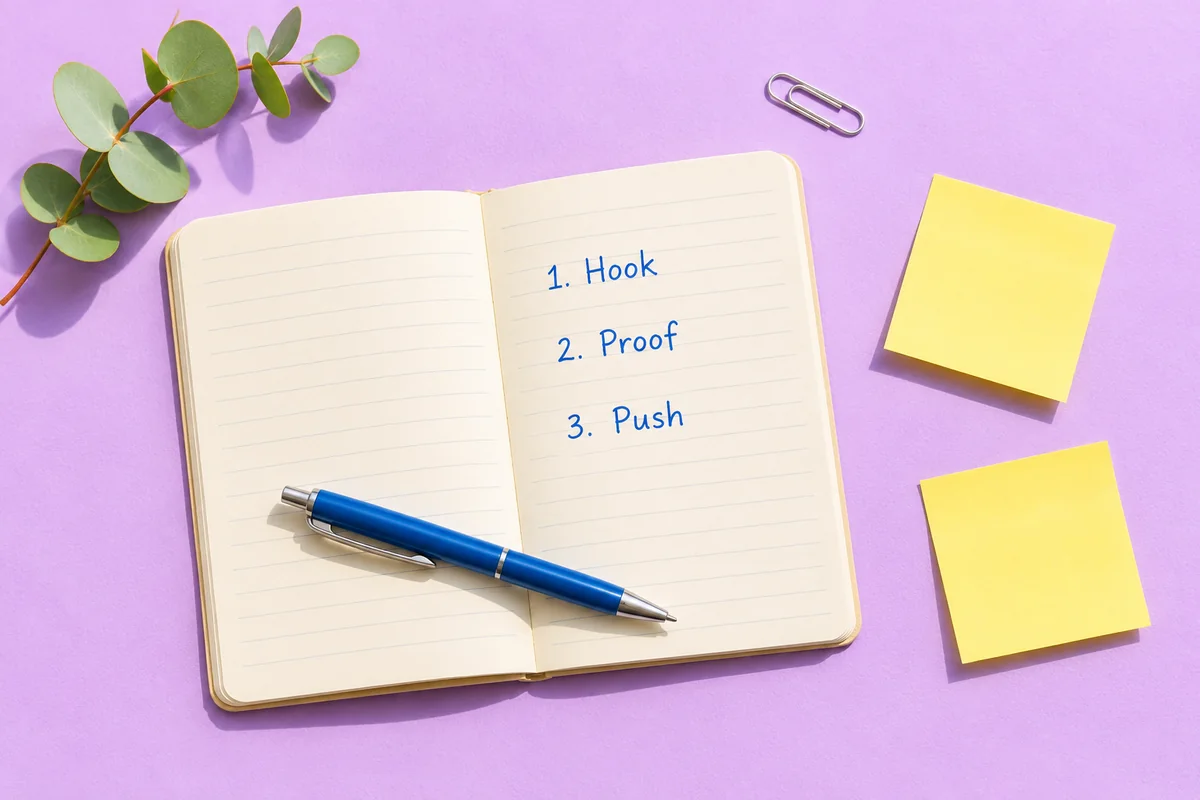
- Line 1, the hook: who it's for plus the result they want, or the offer. Keep it short enough to show before the cut.
- Line 2, the proof: one concrete detail. A number, a material, a short customer quote.
- Line 3, the push: what to do and why now. A deadline, a limited batch, free shipping over a set amount.
Headline
Name the product or the deal in plain words: "Cedar candle, 50-hour burn" or "20% off this weekend." Leave clever wordplay out of the headline.
Button
Match it to the page people land on. A product page gets Shop Now. A booking page gets Book Now.
For more first-line ideas, see our guide to Facebook ad hooks.
Worked example: a small candle shop
This is a made-up example. Pine & Wick sells hand-poured soy candles from a Shopify store and wants sales from a fall scent.
First draft:
We are a small family business passionate about creating beautiful handmade candles using only the finest natural ingredients. Check out our new collection!
Everything above the cut is about the shop. Nothing says what the candle smells like or why to buy now.
Rewrite with the formula:
Your living room, smelling like a cabin in October. 🍂 Our Smoked Cedar candle is hand-poured soy with a 50-hour burn. First batch is 200 candles. Free shipping over $40 this week.
- Headline: Smoked Cedar, 50-hour burn
- Description: Hand-poured in Vermont
- Button: Shop Now
The hook sells the scent, and the proof is a hard number. Two reasons to buy today sit in the last line. If the description never shows, nothing is lost.
Our Facebook ad examples show how other brands handle this.
How to add and test copy in Ads Manager
- Open your campaign in Ads Manager and go to the ad level.
- Pick your image or video.
- Type your primary text, headline and description into their fields.
- Choose a call to action from the dropdown.
- Check every placement in the preview, then publish.
You can add up to five versions each of primary text, headlines and descriptions, and Meta may offer five more written with AI. Meta's systems then decide what each person sees. That's handy, but it makes it hard to tell which line did the work. To compare two ideas cleanly, put them in two separate ads. Our guide to creative testing covers how.
Meta's rules on ad copy
The copy rule to learn first is about personal attributes. Meta's Privacy Violations and Personal Attributes policy says ads must not assert or imply personal attributes. The list includes age, health, disability, religion, race, sexual orientation, gender identity and vulnerable financial status.
In practice, avoid copy that tells the reader something about themselves:
- Not allowed: "Are you 18 years old?" or "Do you have diabetes?"
- Allowed: "Meet seniors" or "New diabetes treatment available"
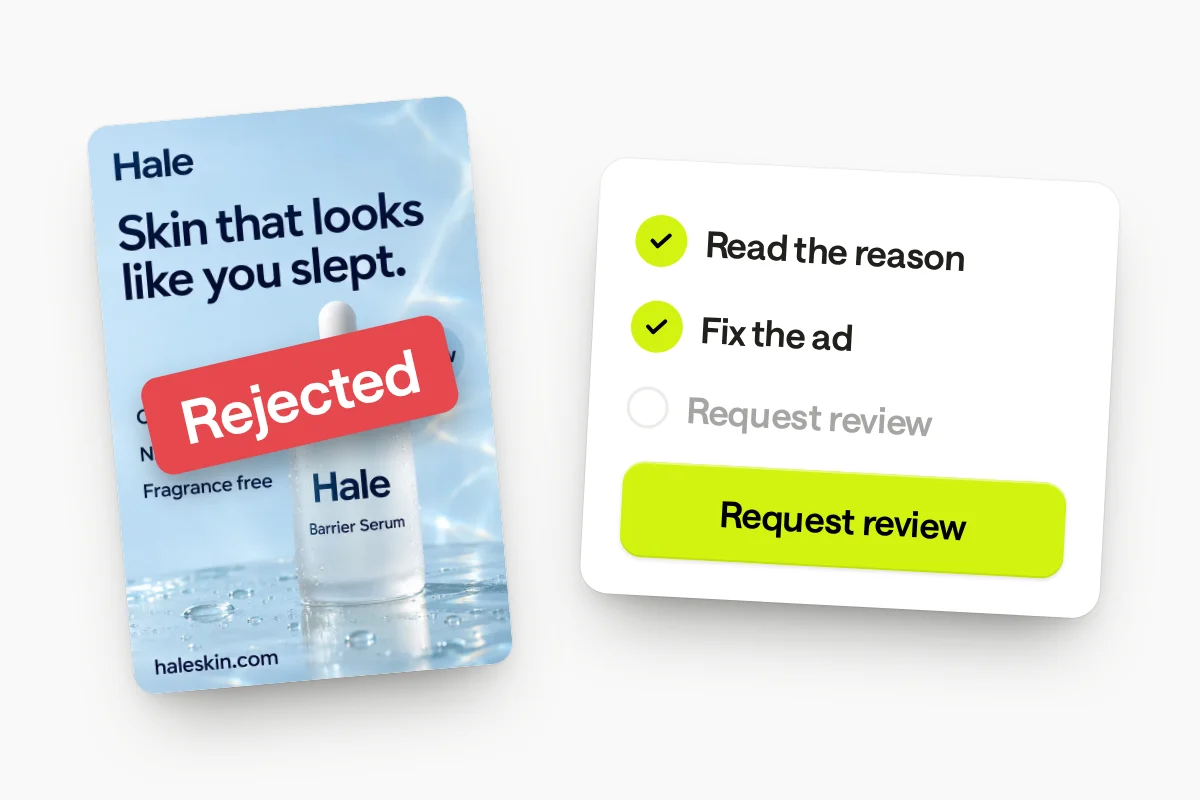
Using "you" or "your" is fine as long as it isn't tied to one of those attributes. "Your dog will love these" is fine. Meta lists "Depression getting you down? Get help now." as not allowed, because it implies the reader has a health condition. If an ad does get turned down, see why Facebook ads get rejected.
Common Facebook ad copy mistakes
- Opening with your company story. Lead with what the reader gets.
- Hiding the offer below the cut. If the discount is in line four, it stays hidden until someone taps.
- Putting key info in the description. It doesn't always show.
- Copy that fights the image. If the photo shows one product, write about that product.
- A button that doesn't match the page. Shop Now that lands on your homepage feels like a bait and switch.
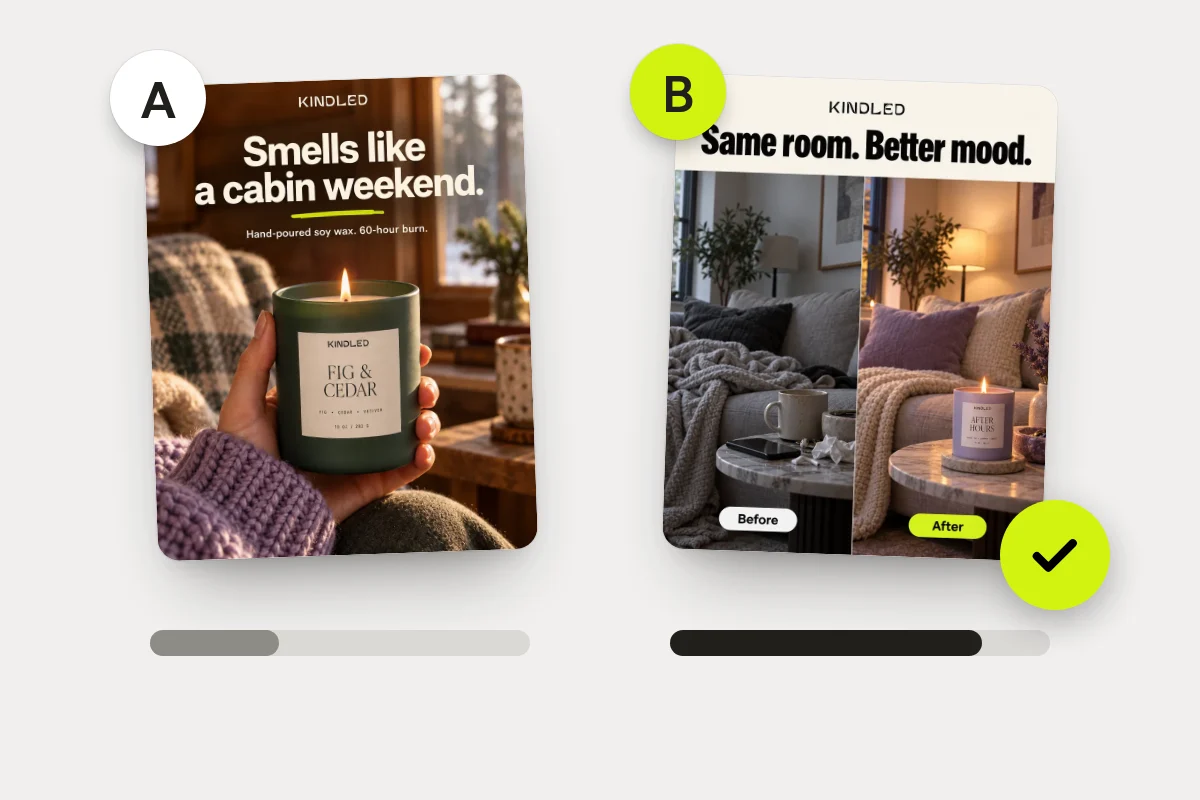
- Writing one version. Draft two or three different first lines and let results pick.
Writing ad copy with ScaleShot
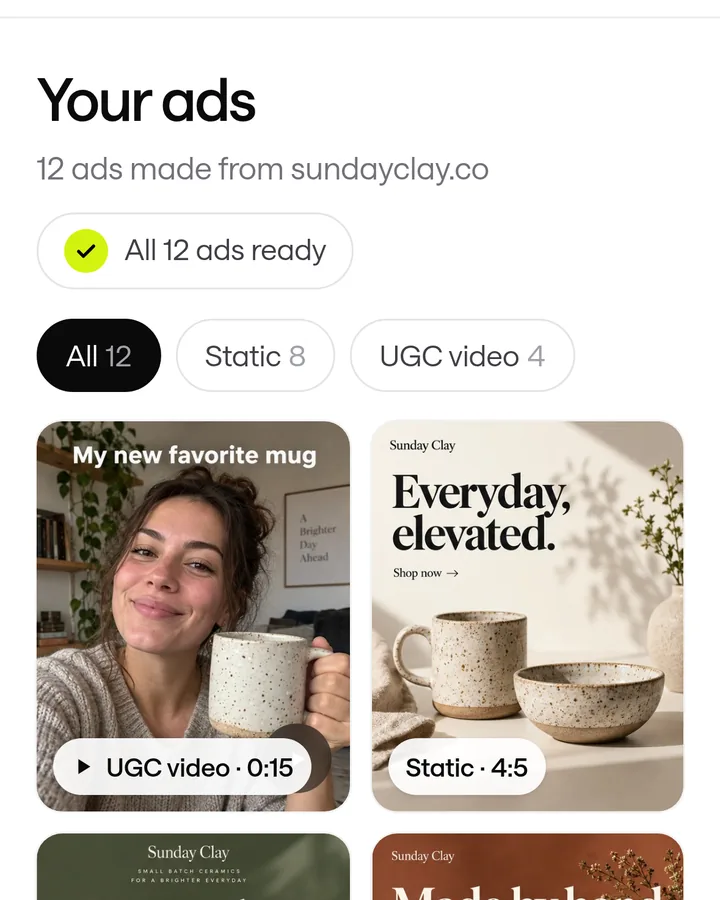
You can chat with our Ads Agent to try different copy and concepts for your ads. When you launch from ScaleShot, you can edit each ad's copy and call to action before it goes to Meta. If you upload an ad you already designed, you write its headline and text in the campaign.
Facebook ad copy questions
Is long or short copy better for Facebook ads?
Either can work. Only the opening shows before the cut, so it has to stand alone, and the length Meta's ads guide recommends for Feed image ads is short.
Can I use emojis in Facebook ad copy?
Yes. One or two can break up text and draw the eye. Don't let them replace words that explain the offer.
Can I say "you" in a Facebook ad?
Yes. Meta allows "you/your" language as long as it doesn't point to a personal attribute like health or age.
Does the description show on mobile?
Often it doesn't. Treat it as a bonus line and keep your offer in the primary text and headline.
ScaleShot TeamWe build ScaleShot, an AI ad tool for small businesses on Facebook and Instagram. How we make our guides
Sources
- Facebook Feed image ad specs, Meta Ads Guide
- Facebook Ad Dimensions and Character Limits, Jon Loomer
- Privacy Violations and Personal Attributes, Meta Transparency Center
- The Evolution of Meta Ads Copy and Creative Control, Jon Loomer