How to write Facebook ad hooks
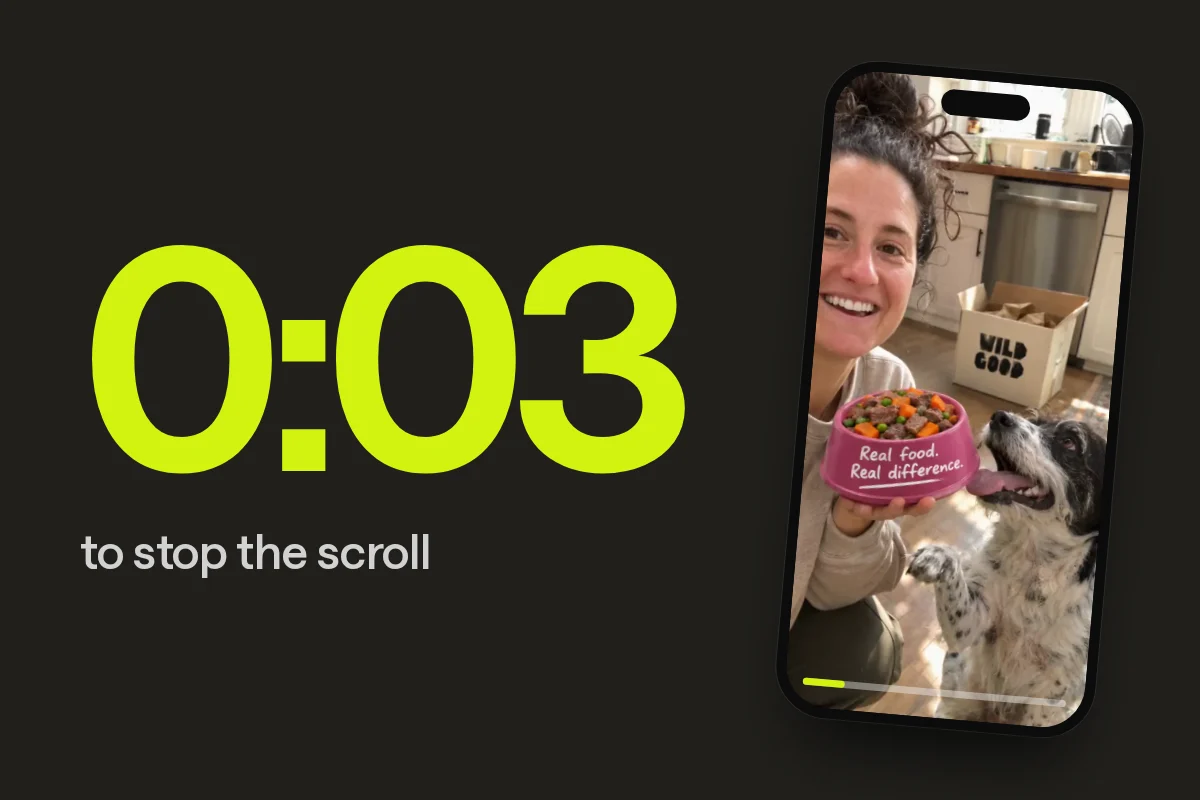
A hook is the first line of your ad text or the first three seconds of your video, and its only job is to stop the scroll. In 2016, Meta found people spent about 1.7 seconds on a piece of mobile feed content. Lead with the problem, the result or the offer, then test several hooks.

What a hook is
The hook is whatever someone sees before deciding to keep scrolling.
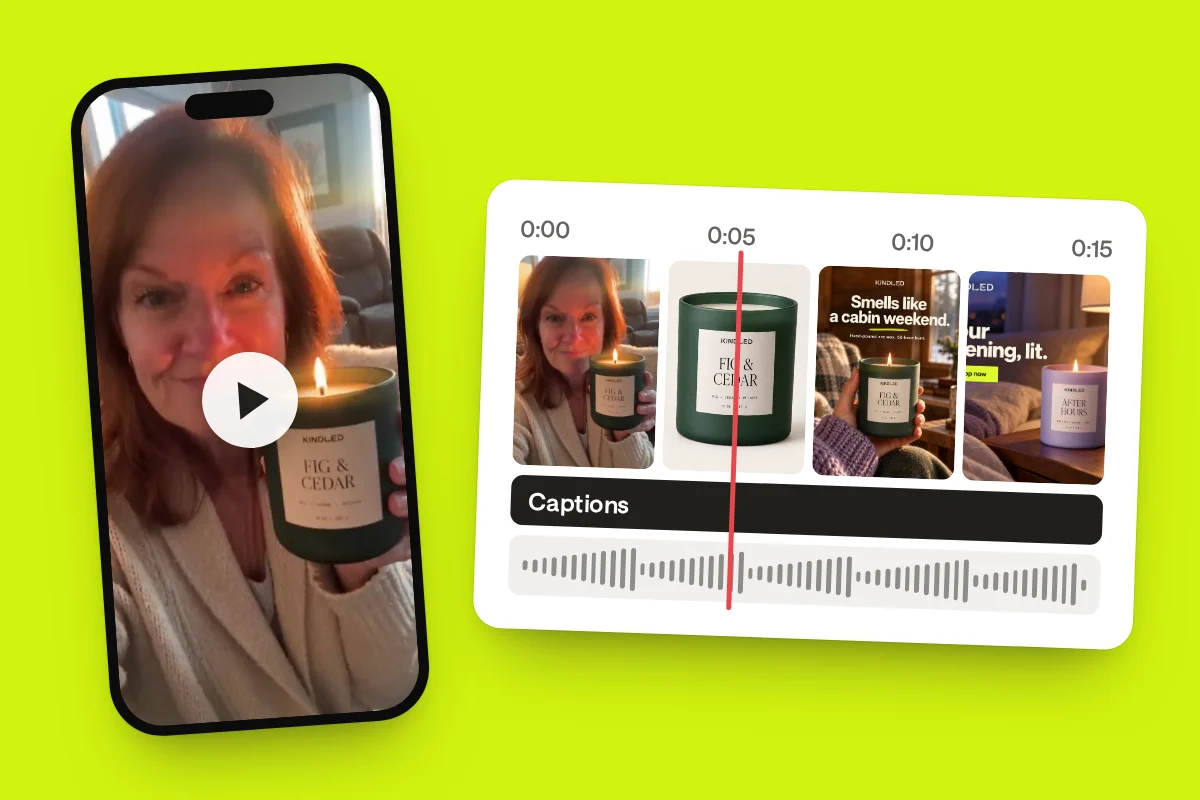
- In a video ad, it's the first three seconds: the opening shot, any text on screen and the first words spoken.
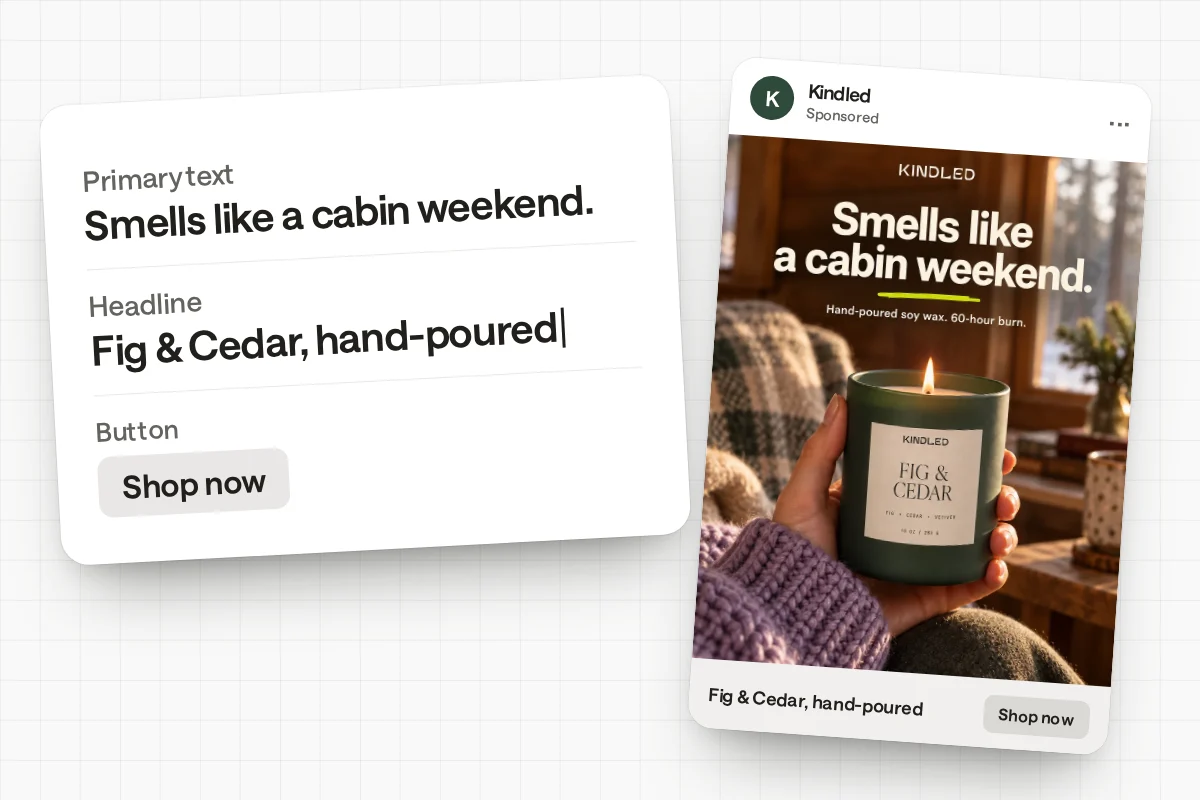
- In an image ad, it's the image itself plus the first line of primary text above it.
Time is short. Meta's own research, published in 2016, found people spent 1.7 seconds with a piece of content on mobile, against 2.5 seconds on desktop. Tests reported in the same article found people could recall mobile feed content after only 0.25 seconds of exposure.
What the data says about attention on video
In a 2015 study Meta commissioned from Nielsen, people who watched less than three seconds of a video ad created up to 47% of the campaign's total value, and people who watched less than 10 seconds created up to 74%, depending on the metric. The research is old, so read it as a direction: the opening seconds carry a large share of the work.
You can measure this for your own ads. Hook rate is 3-second video plays divided by impressions, times 100. A benchmark page from Sovran uses Billo's data on 88,329 Meta video ads with a sales goal and more than 1,000 impressions each, from January to June 2026, and puts the average at 25.44%. By category it lists Animals & Pet Supplies at 21.32% and Health & Beauty at 28.11%. The page calls these reference points, not targets.
Hook types with example lines
Every line below is a made-up example for a small shop. Swap in your own product.
The problem
Name a frustration your buyer already has.
- Dog treats: "Most dog treats list sugar in the first five ingredients."
- Plumber: "That dripping faucet wastes water every hour you ignore it."
The result
Show life after the purchase.
- Candles: "Your living room, smelling like a cabin in October."
The offer
Lead with the deal when the deal is the news.
- "Our fall candles are 20% off until Sunday."
The odd detail
A specific fact people don't expect.
- "We bake every batch of dog treats in a converted 1950s bakery."
The customer's words
Open with a short review, in quotes.
- "'My picky beagle finished the bag in a week.' Lisa, Ohio"
The number
Concrete figures beat adjectives.
- "One candle, 50 hours of burn time."
One caution: hooks that call out the reader can break Meta's rules. Meta's ad policy lists "Are you 18 years old?" as not allowed, because it asserts a personal attribute. Our guide to Facebook ad copy explains the policy.
How to open a video ad
For video, the hook is mostly visual. These openings work for small shops filming on a phone:
- Start mid-action. Pour the wax, pull the treat from the oven, turn the wrench. Skip logos and intros.
- Put the hook line on screen as text in the first second, so it lands with the sound off.
- Show the product or the result in frame one. Don't make people wait for the reveal.
- Speak the first words fast. If someone talks to camera, the first sentence is the hook line.
The rest of the video structure is covered in our guide to making Facebook video ads, and you can see openings from real brands in these Facebook video ad examples.
How to test hooks against each other
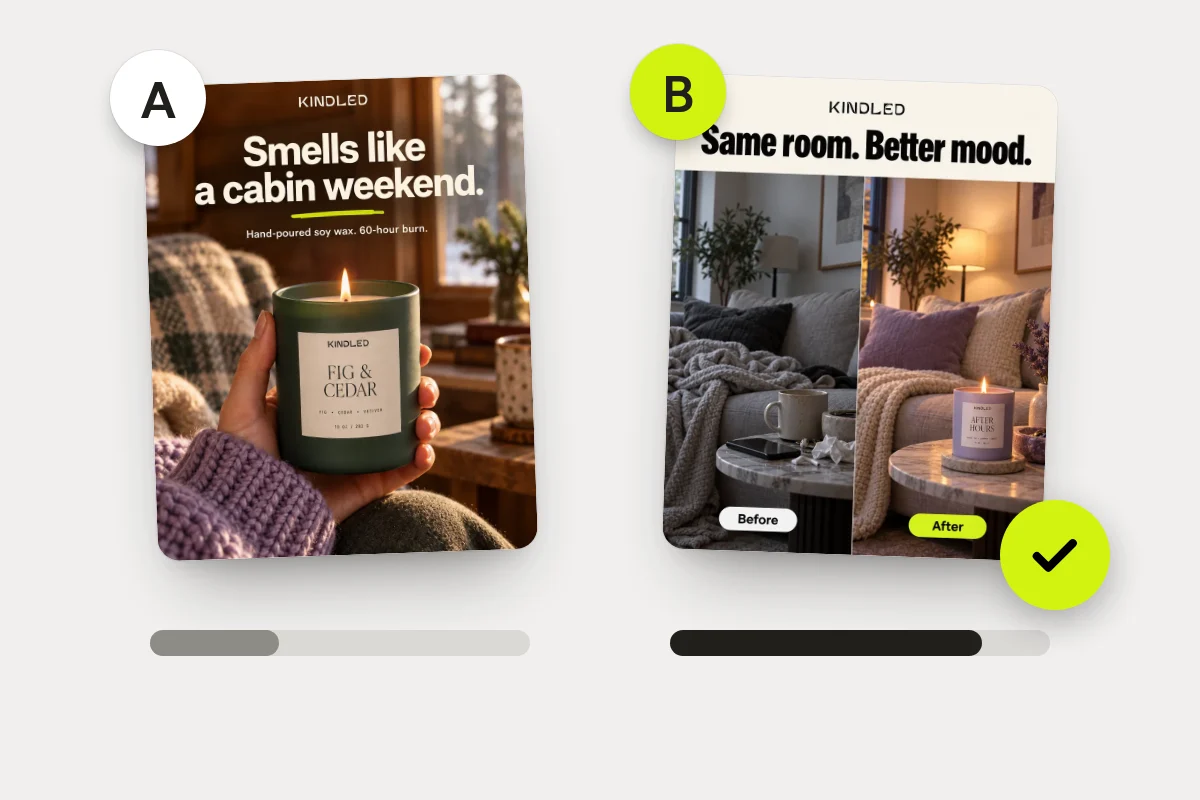
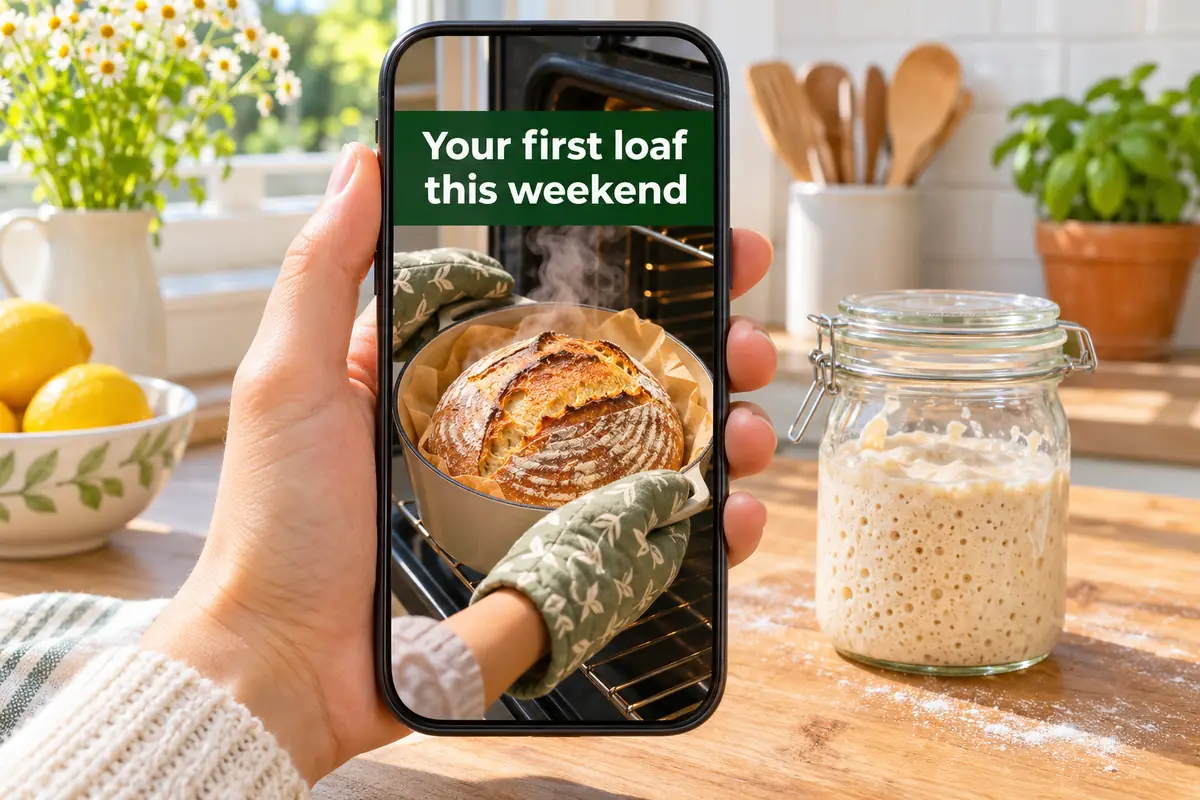
Change only the hook and keep everything else the same.
- Write three to five hooks of different types from the list above.
- Make one ad per hook. For video, swap the first three seconds and keep the rest of the edit. For images, keep the picture and swap the first line of text.
- Run them in Ads Manager's A/B test with ad creative as the variable. Meta's split testing documentation says the test divides the audience with no overlap between groups and recommends testing only one variable per test.
- Give it time and money. Meta notes that tests with larger reach, longer schedules or higher budgets tend to give more statistically significant results.
- Compare hook rate for video and click-through rate for images. Then check which one brought cheaper sales or leads, because that's the number that pays your bills.
Keep the winning hook and write new challengers against it. For a fuller testing setup, see Facebook ad creative testing.
Common hook mistakes
- Opening on your logo. Viewers decide before it fades.
- A slow build. Meta's research found short views carry much of a video ad's value, so put the reveal up front.
- Clickbait the ad can't back up. A hook that promises more than the product delivers gets clicks that don't buy.
- Testing hooks that are all the same type. Five problem hooks teach you less than one of each type.
- Judging a hook on likes. Use hook rate and cost per result.
Trying more hooks with ScaleShot
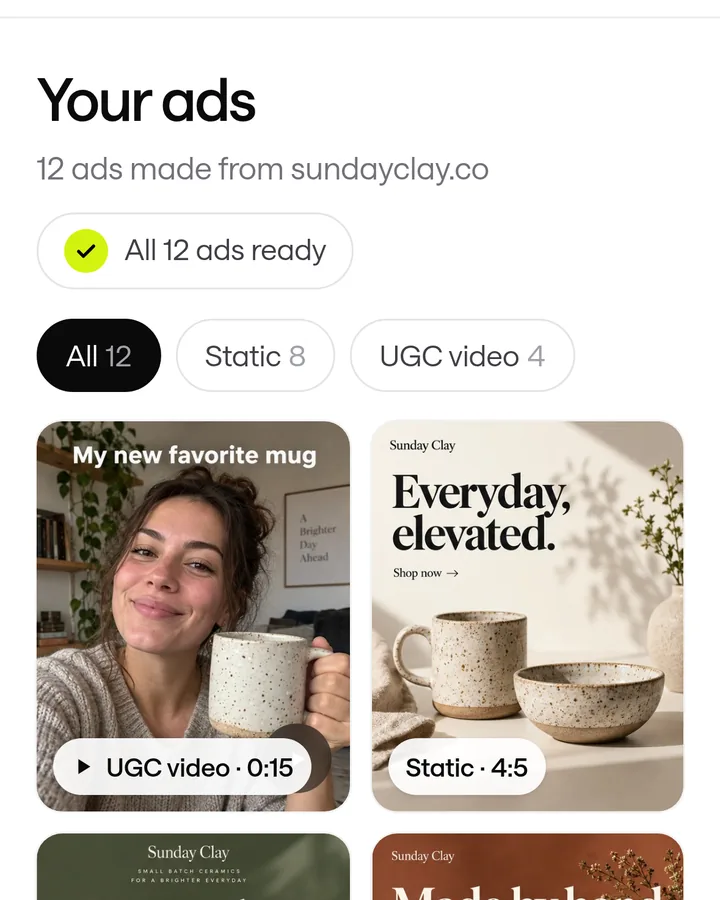
Our Ads Agent makes image and video ads from a chat, and it shows you a card to edit or approve before any credits are spent. You can also ask it to look at the ads in your Library and suggest what to try next, which makes it quicker to get several hook ideas onto the screen.
Facebook ad hook questions
How long should a Facebook ad hook be?
For text, one short sentence. For video, plan for the first three seconds, since hook rate is built on 3-second plays.
What is a good hook rate on Facebook?
Billo's January to June 2026 data, published by Sovran, puts the average for Meta video ads with a sales goal at 25.44%. Compare your ads against each other first, since categories differ.
Does an image ad need a hook?
Yes. The picture and the first line of primary text do the same job as a video's opening. A clear product shot plus a strong first line is the image version of a hook.
How many hooks should I test at once?
Three to five is a practical range for a small budget. More versions split your money thinner, and Meta notes bigger budgets give more reliable test results.
ScaleShot TeamWe build ScaleShot, an AI ad tool for small businesses on Facebook and Instagram. How we make our guides
Sources
- Capturing Attention in Feed: The Science Behind Effective Video Creative, Meta for Business
- The Value of Video for Brands, Meta for Business
- Split Testing, Meta for Developers
- Hook rate by industry, Sovran
- Privacy Violations and Personal Attributes, Meta Transparency Center