How to find ad angles for your product
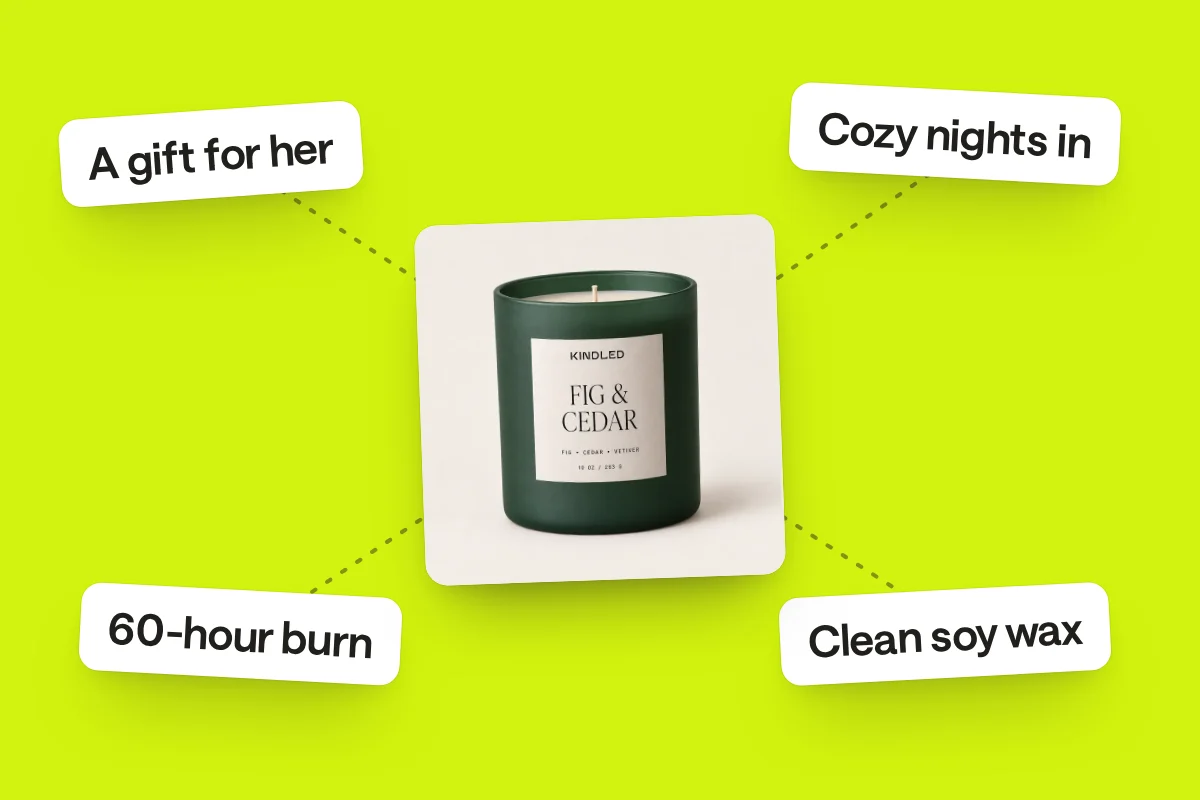
An ad angle is the main reason to buy that one ad leads with. The same product can be sold on price, on quality, as a gift or as a fix for a problem. Find angles in your reviews, customer questions and competitor ads, then make a separate ad for each one.

Angle, hook and format: what each one means
These three words get mixed up. They are separate choices, made in this order.
- Angle is the argument. "This wallet lasts ten years" is an angle.
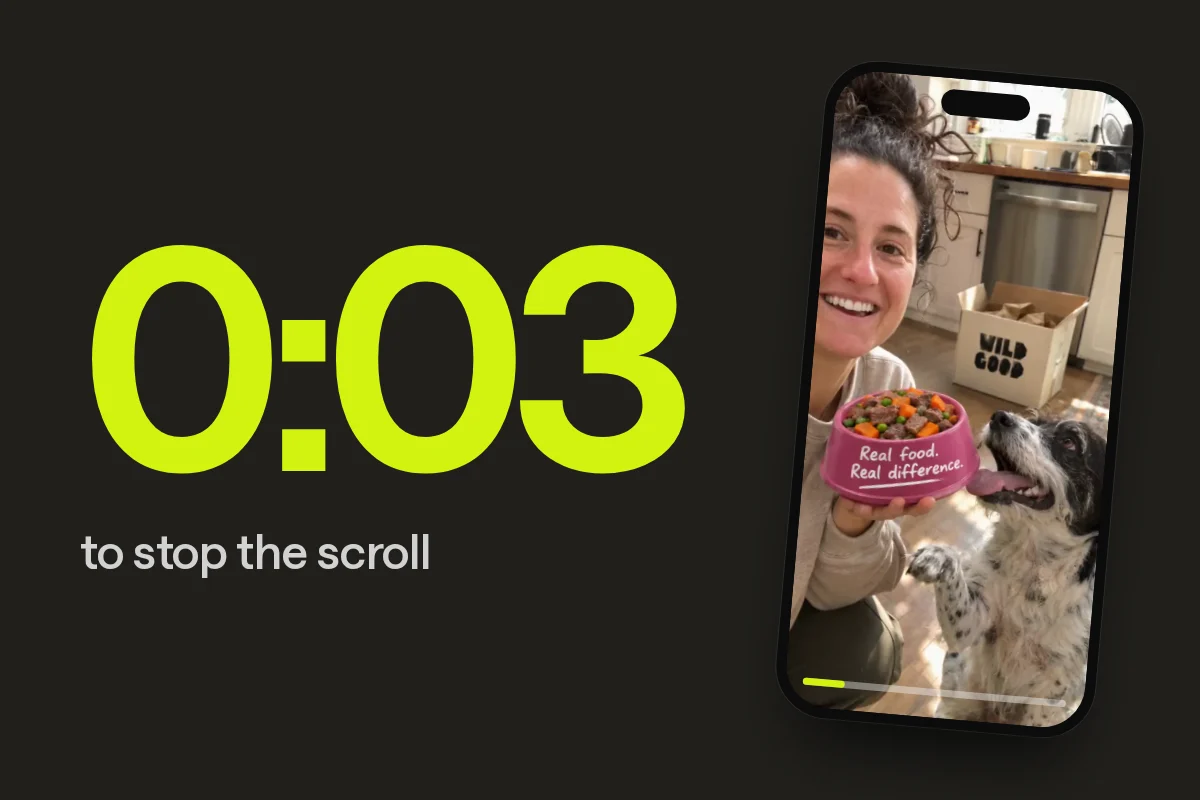
- Hook is the first second or first line that makes someone stop. "I've carried this wallet since 2016" is a hook for the durability angle. One angle can have many hooks. Our guide to Facebook ad hooks covers how to write them.
- Format is the container: an image, a video or a carousel. Any angle can go in any format.
If you test two ads that differ only in color, you've tested a format detail. If they differ in angle, you've learned what makes people buy.
Why angles matter more on Meta now
Meta now leans on your ads to find buyers. Jon Loomer's October 2025 article on creative diversification points out that most products have several customer personas, each with slightly different pain points. He advises tailoring the text to "the customer persona, pain point, or angle you're highlighting", and warns that "generic ads focused only on features" won't reach your ideal customer.
He also reports that Meta recommends unique text for each ad, with differences that are "significant, not subtle". A new angle is the easiest way to make an ad different in a way that counts.
Where to find angles for your product
Your reviews
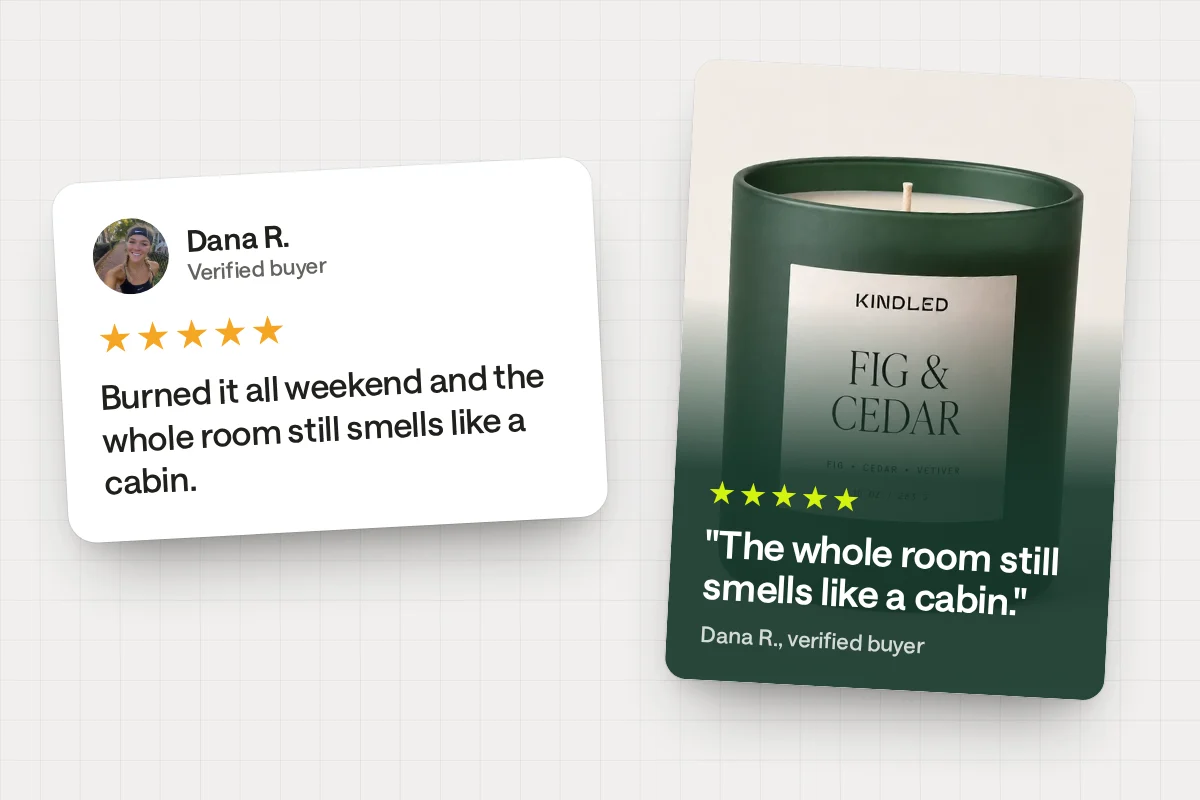
Read your five-star reviews and copy the phrases people repeat. If three customers say "it still looks new after a year", that's an angle written in your buyers' own words. Read the three-star reviews too. They show what almost stopped people. Reviews carry weight with shoppers: in a 2017 study, Northwestern's Spiegel Research Center found that reviews lifted conversion more for a higher-priced product than for a cheaper one.
Objections
List the questions people ask before buying, by email, in DMs or in comments. Each objection turns into an angle: "Is it worth $60?" becomes a cost-per-year angle.
Use cases
Write down every moment someone uses your product. A wallet is carried daily, given at graduations and taken on trips. Each moment can lead an ad.
Competitor ads
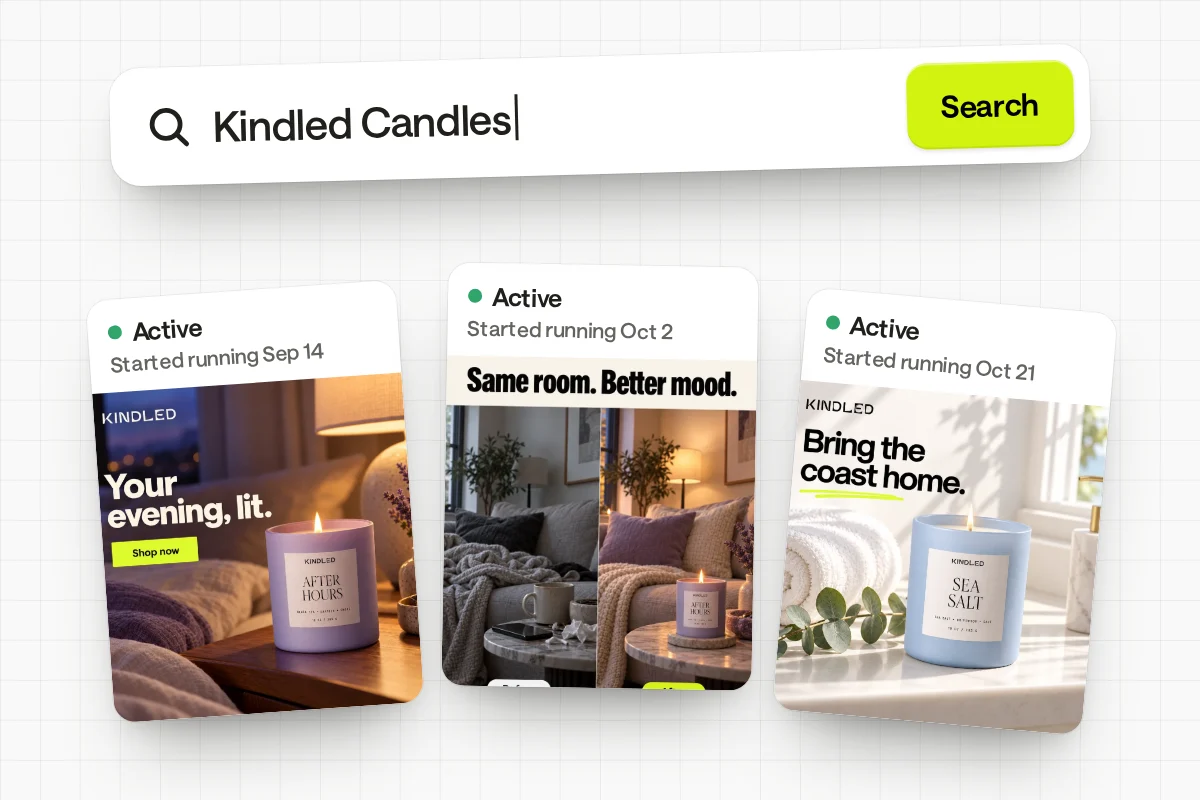
Meta's Ad Library contains all active ads shown across Meta's apps, and anyone can view and search it. You can search any term, name or Page, and select "See ad details" for more on an ad. Look for the reason each competitor leads with, then find one they all skip. Our guide to the Meta Ad Library walks through the search.
10 ad angle types with examples
Each example is for a made-up shop, Ridge Leather, that sells a $60 handmade wallet.
- Problem. "Your wallet shouldn't need a rubber band to close."
- Result. "A wallet that fits in your front pocket with eight cards inside."
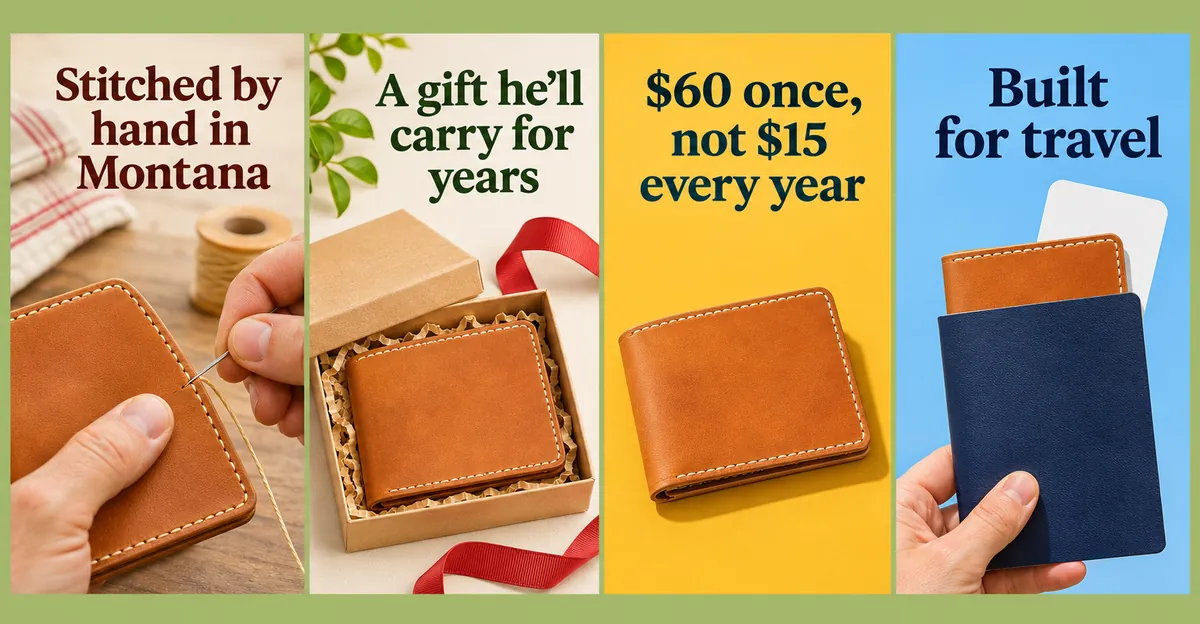
- Durability or value. "$60 once, instead of a $15 wallet every year."
- Craft or origin. "Cut and stitched by hand in Montana."
- Social proof. "2,000 customers and a 4.8-star average." (Only use real numbers.)
- Comparison. "Our leather next to the bonded leather in a mall wallet."
- Objection. "Worried it's too stiff? It softens in a week."
- Gift. "The graduation gift he'll carry for ten years."
- Use case. "Built for travel: cards, cash and a boarding pass."
- Offer. "Free name engraving through Sunday."
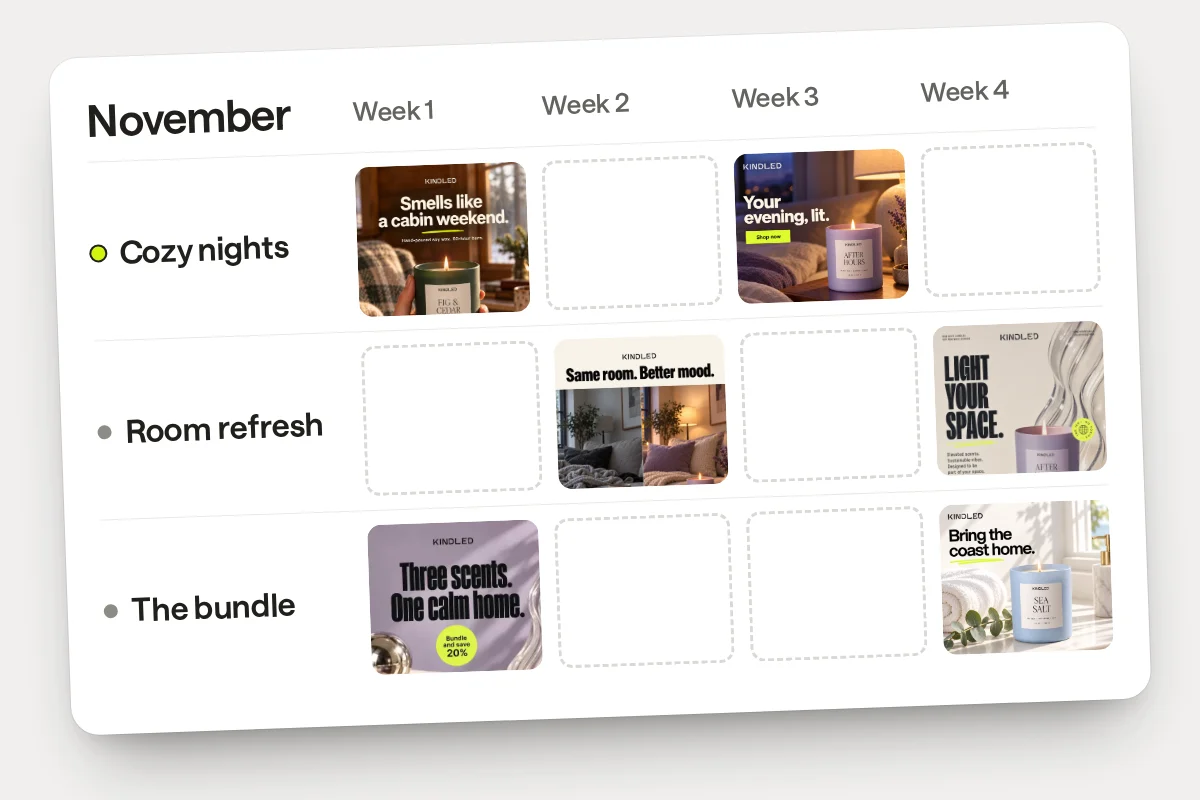
Pick three or four that match real groups of your buyers. Write each one as a single plain sentence before you design anything. If you can't say it in one sentence, the ad won't say it clearly either. Then give each angle a couple of hooks and make one image and one video for it. Our guide to building a creative strategy shows how to turn them into a monthly plan.
Angles that break Meta's ad rules
Two angle types need extra care.
Problem angles that point at the viewer. Meta's personal attributes policy says ads must not contain content that "asserts or implies personal attributes" of the people who see them. The listed attributes include age, physical or mental health, religion and disability. Meta gives "Are you gay?" as an example of text that isn't allowed. Talk about the product's problem instead of the person's.
Body and before-and-after angles. Meta's Health and Wellness policy says weight loss and cosmetic ads can't contain statements of inferiority about physical appearance, meaning negative words that attack someone's looks, body parts or hygiene. Weight loss ads also can't show a close-up of someone pinching fat. Cosmetic products and procedures may show a before-and-after transformation, but those ads must target people 18 or older.
If an ad is rejected anyway, see why Facebook ads get rejected.
Turning angles into ads with ScaleShot
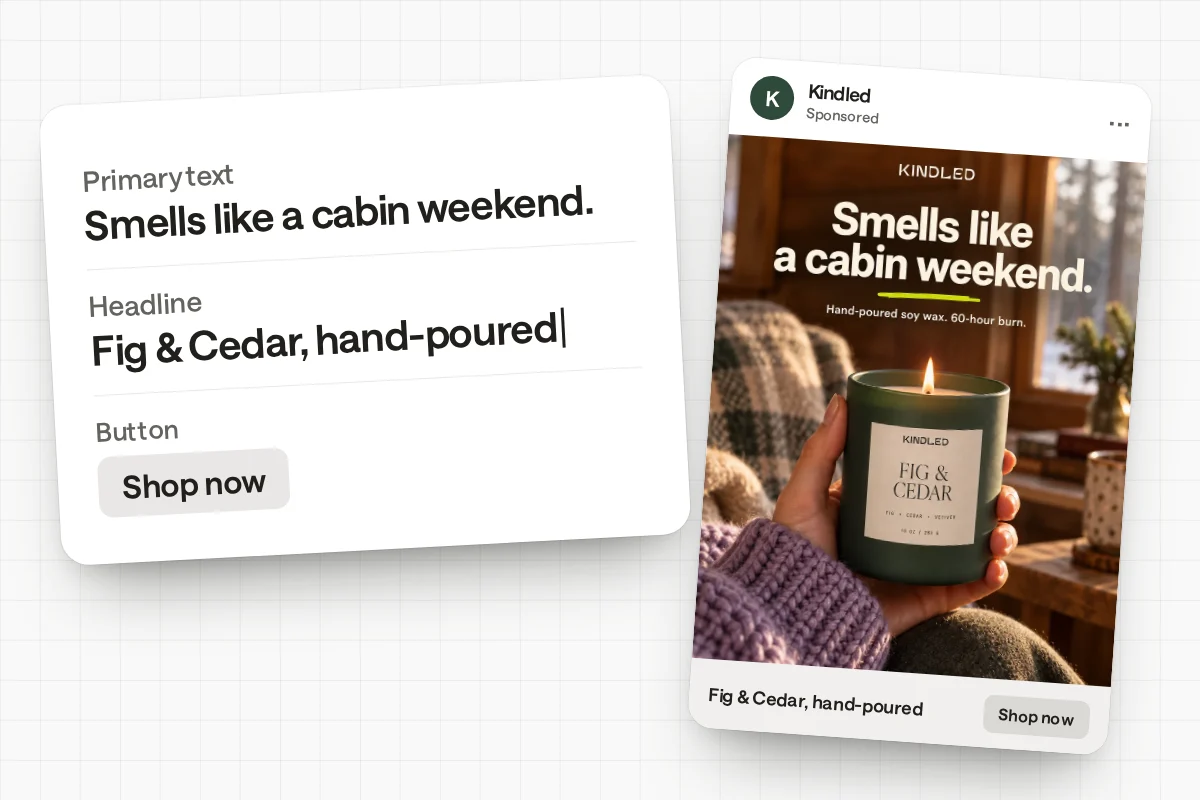
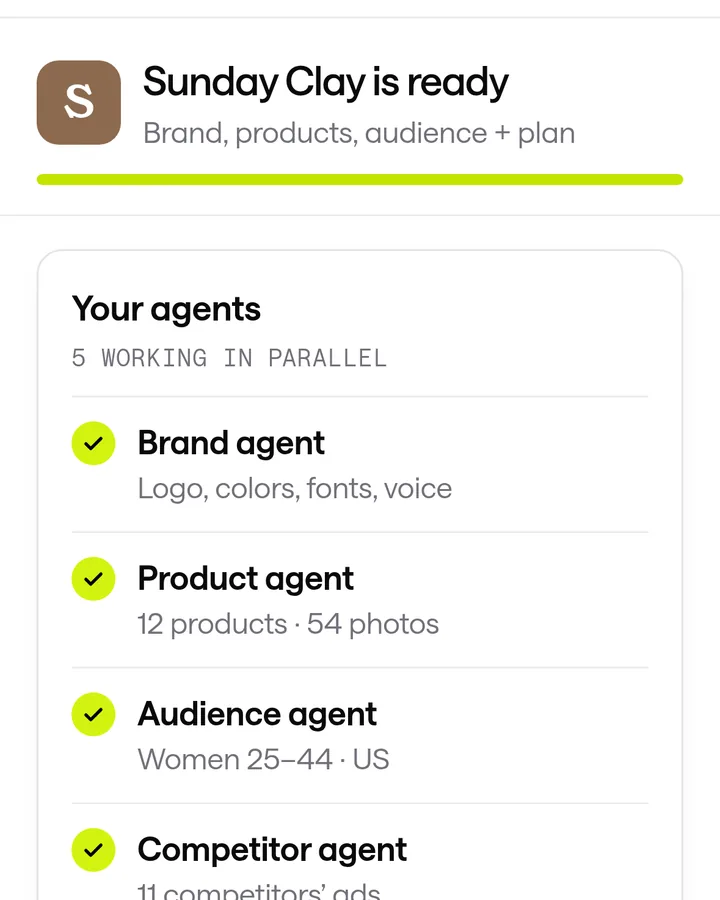
ScaleShot's Ads Agent can see your brand, products and past ads, so you can ask in plain words for ads built on a specific angle. It can look at the ads in your Library and suggest what to try next, and it can search the web for competitors. Each ad shows up as a card you can edit or cancel before any credits are spent.
Ad angle questions
How many ad angles should I test?
Three or four is enough for a small budget. More angles split your spend into pieces too small to read.
What is the difference between an ad angle and a USP?
A USP, or unique selling proposition, is the one thing that sets your business apart. An angle is any reason to buy that one ad leads with, so your USP is usually one of your angles.
Can I copy a competitor's angle?
You can lead with the same reason to buy, in your own words and images. Don't copy their images or wording, which belong to them.
Do ads stay in the Meta Ad Library after they stop running?
Only some. Meta says ads that aren't about social issues, elections or politics, and weren't delivered to the EU or UK, are not archived once they stop.
ScaleShot TeamWe build ScaleShot, an AI ad tool for small businesses on Facebook and Instagram. How we make our guides
Sources
- About the Meta Ad Library, Meta Business Help Center
- Meta Andromeda and creative diversification, Jon Loomer
- Privacy violations and personal attributes, Meta Transparency Center
- Health and wellness, Meta Transparency Center
- How online reviews influence sales, Spiegel Research Center, Northwestern University