How to build a creative strategy for Facebook and Instagram ads
A creative strategy is a plan for which ads you make, why, and when you replace them. For a small shop it can fit on one page: three or four angles, two or three formats for each, one launch, a weekly check, and new ads on a fixed schedule. Meta's engineers say more ad variety can drive better outcomes.

Why creative needs a plan now
On Meta, your ads do a big part of the targeting. Meta's December 2024 post on its Andromeda retrieval system says increased ad diversity can "drive better advertiser outcomes". Jon Loomer put it this way in October 2025: creative diversification "effectively replaces what audience targeting used to do".
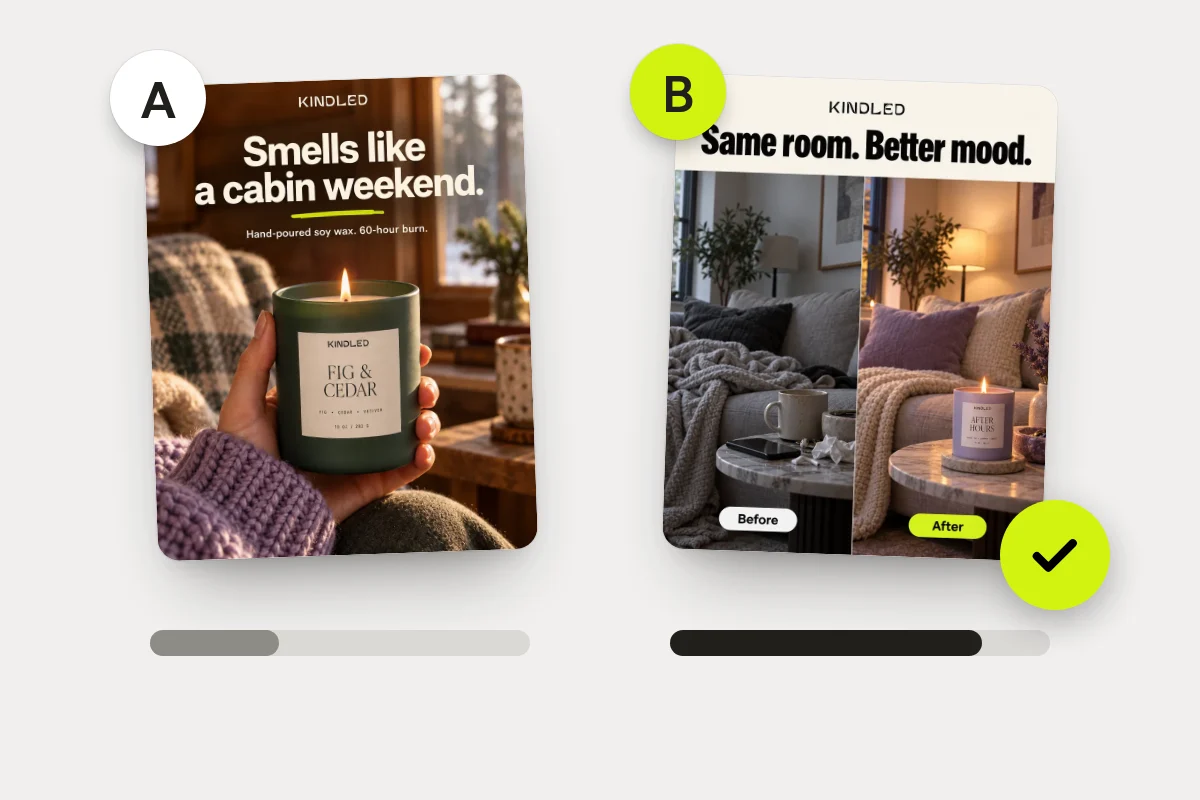
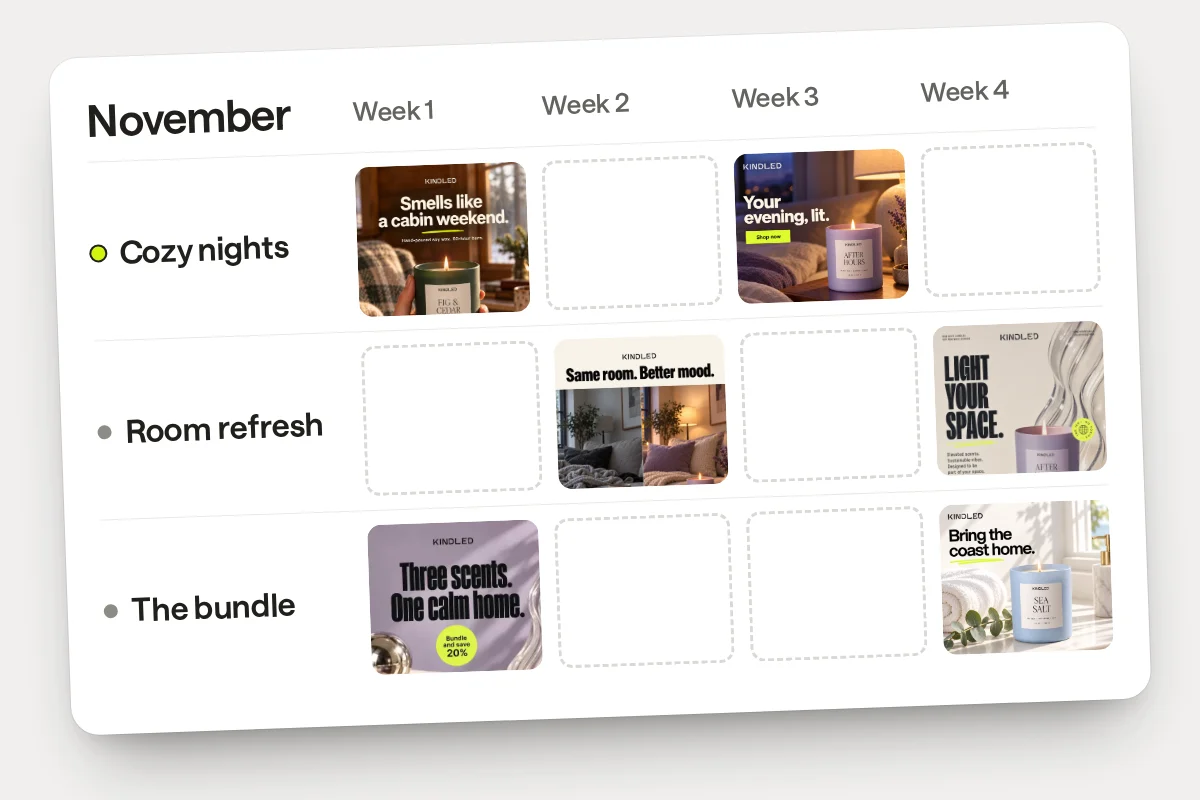
That changes the job. Ten copies of one idea in different colors don't count as variety. Loomer notes the differences in text "should be significant, not subtle". You need ads that speak to different reasons people buy.
Step 1: Pick three or four angles
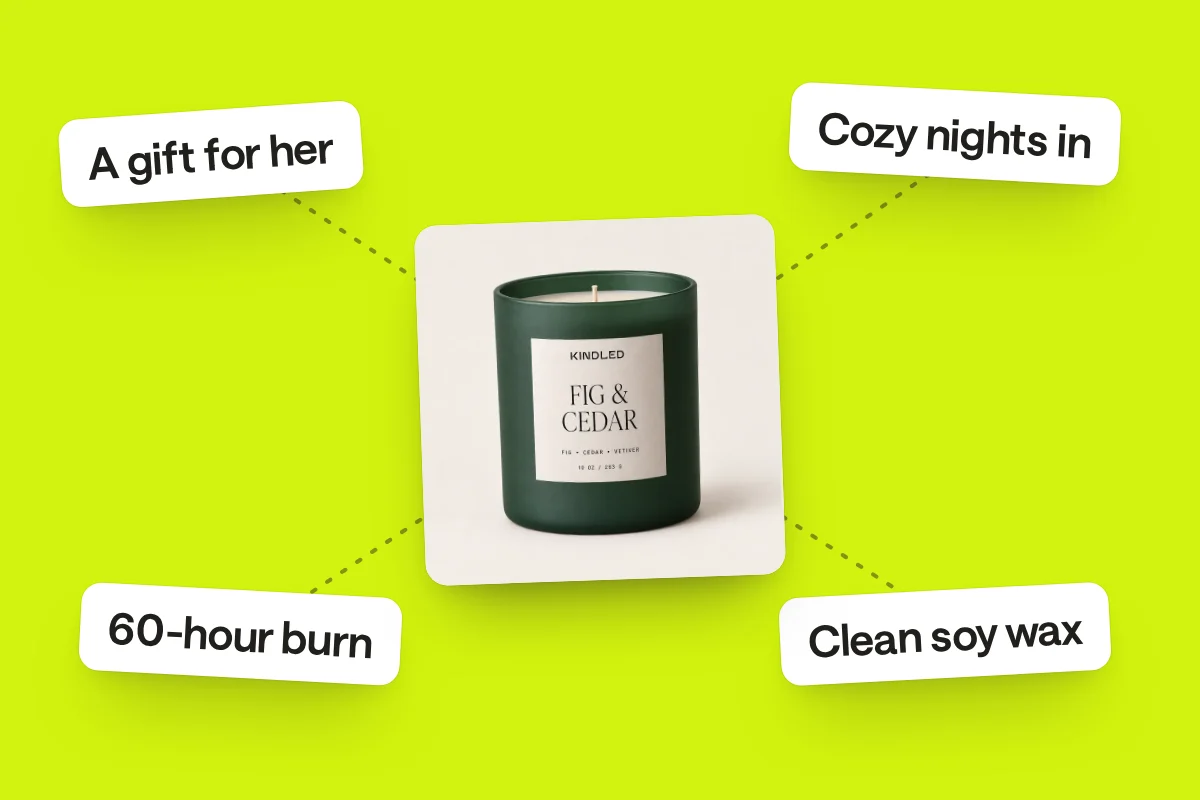
An angle is the reason to buy that the ad leads with. Different buyers care about different things, so each angle should match a real group of customers.
Good places to find them:
- Your best reviews. Note the exact words customers use.
- The questions people ask before they buy.
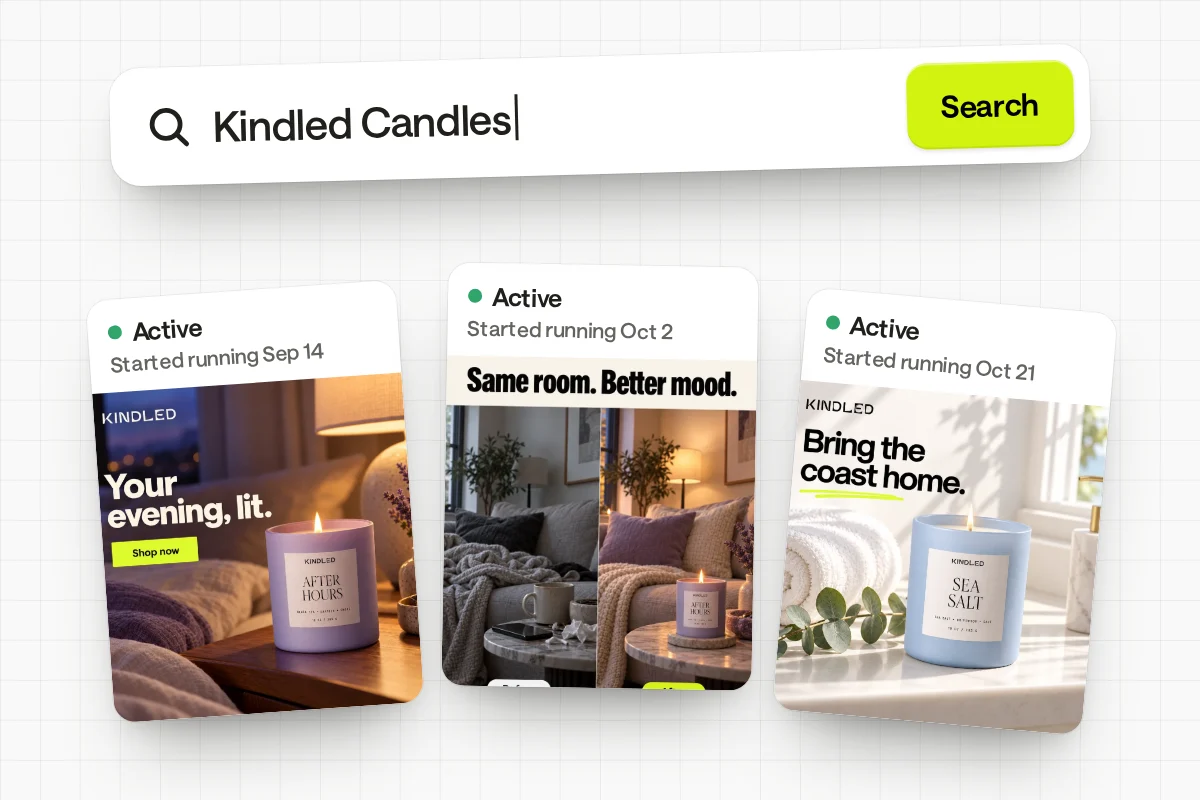
- Competitor ads in the Meta Ad Library.
- The moments people use your product.
Keep three or four. More than that spreads a small budget too thin. Our guide to ad angles has a full list of angle types with examples.
Step 2: Make two or three formats for each angle
Each angle gets a few ads in different formats. Meta's ads guide lists image, video, carousel and collection formats. For a small shop, image and short video cover most needs. A carousel shows up to ten images or videos, each with its own link, which helps when you sell several products. Loomer also recommends a mix of formats and aspect ratios that fit each placement.
A simple set per angle:
- One image ad with a short line of text.
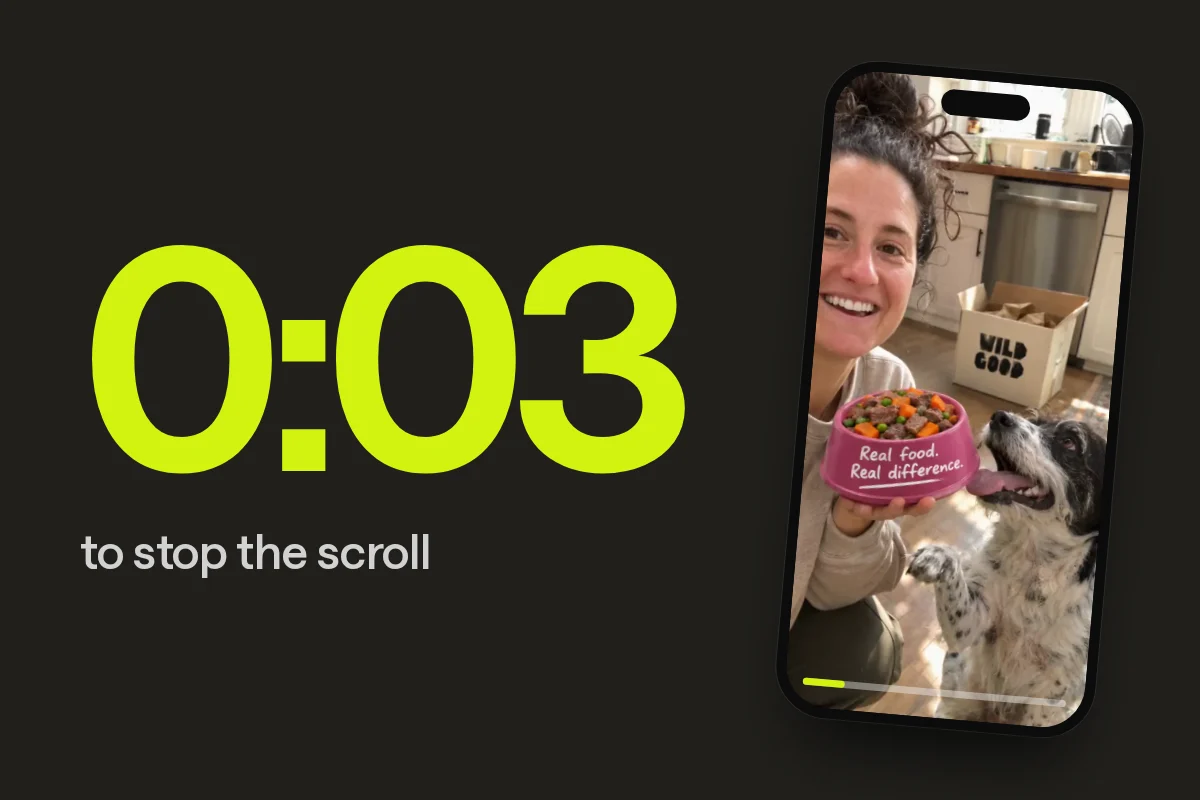
- One short vertical video.
- Optionally, a carousel or a second image with a different headline.
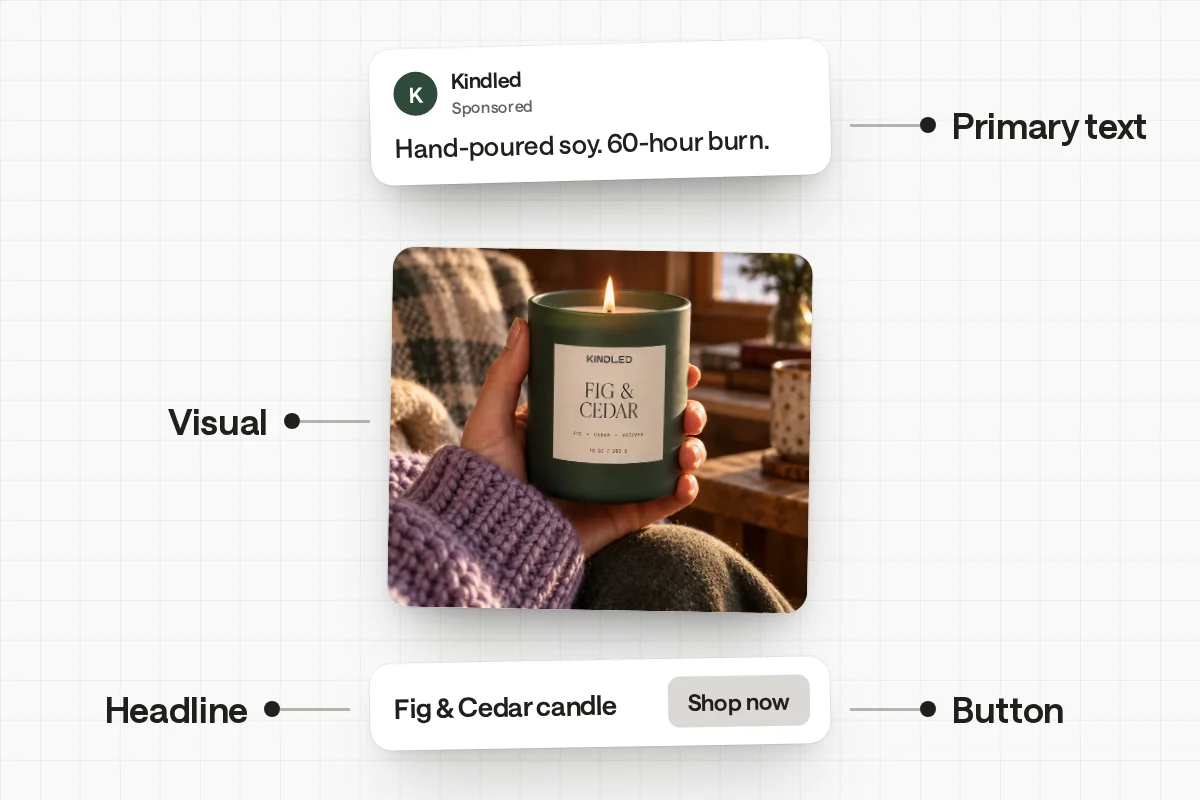
With four angles, that is eight to twelve ads. You don't have to launch them all at once. See what an ad creative is for the parts of each ad and Facebook ad design for how to lay them out.

Step 3: Launch, then read results on a schedule
Put your ads in as few ad sets as you can. Meta's learning phase page warns that many ads and ad sets mean the system learns less about each one. It also says an ad set usually leaves learning after about 50 results in the week after its last significant edit, and advises waiting to edit until then.
A small shop selling a $30 product may not reach 50 purchases a week, so its numbers will stay noisy for longer. Pick one day a week to check results and leave the ads alone in between. When you check, look at:
- Cost per result, the number that pays your bills.
- Click-through rate, the share of people who click after seeing the ad.
- Frequency, the average number of times each person has seen it.
Jon Loomer warns against overreacting to results from a small sample. Give an ad a full week before you call it.
Step 4: Replace losers on a fixed rhythm
Every ad wears out. Meta's developer documentation on creative fatigue says fatigue rises as an audience sees the same creative again and again, and it "usually shows up as a falling click-through rate and a rising cost per action". It suggests watching frequency and click-through rate day by day to see the decline.
A rhythm that works on a small budget:
- Every two weeks, pause the ads with the worst cost per result.
- Make new ads for the angle that is winning, in a format you haven't tried yet.
- Every month, test one new angle in place of the weakest one.
Loomer describes the same loop: "learn from the results to generate a new batch of ads to test". For a closer look at testing, see Facebook ad creative testing.
Example: a one-month plan for a dog treat shop
This is a made-up example. Paw Pantry sells single-ingredient dog treats for $24 a bag and spends $20 a day on Meta ads.
Angles:
- Ingredients: "One ingredient. You can read the whole label."
- The dog's reaction: a dog going wild when the bag opens.
- Training: small pieces that fit in a pocket.
- Gifts: a bundle for a friend's new puppy.
Week 1. Make one image and one video for each angle, eight ads in total. Launch them in one ad set with a Sales goal.
Week 2. Check results once. Leave everything running.
Week 3. Pause the three ads with the highest cost per purchase. Say the dog's reaction videos are winning. Make two more videos for that angle with different openings, plus one carousel.
Week 4. Swap the weakest angle for a new one, such as "made in small batches". Write down what you learned before next month starts.
Planning and making the ads with ScaleShot
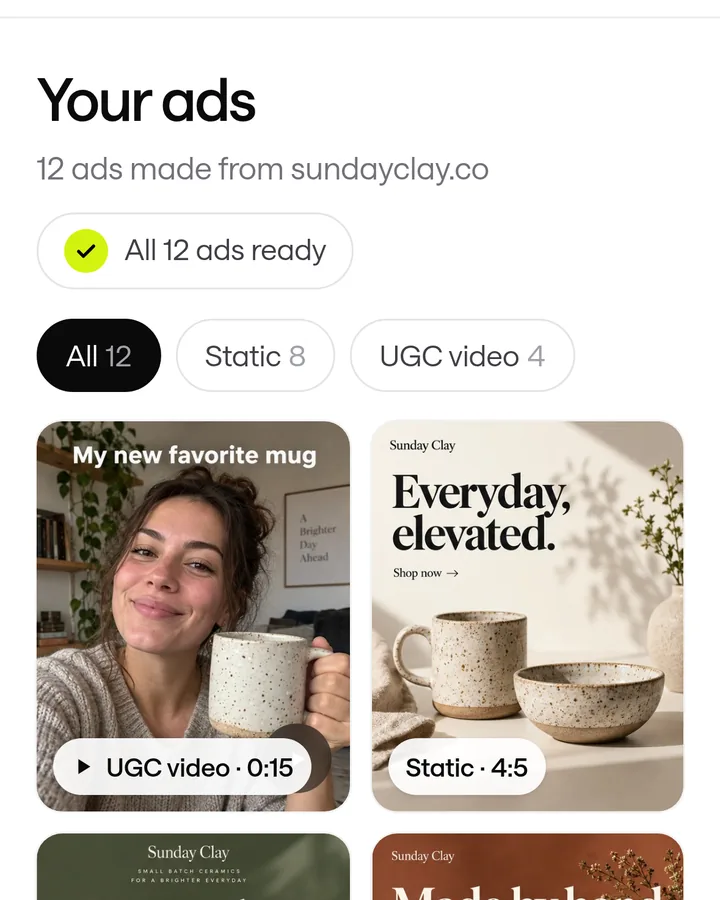
ScaleShot's Ads Agent can write a 30-day ad plan for your shop and save it as a checklist, where each ad can be made from the chat. It also looks at the ads already in your Library and suggests what to try next. With a connected Meta ad account it launches the campaigns, shows results and asks before it pauses an ad or changes a budget.
Creative strategy questions
How many ads should a small business run at once?
Fewer than you think. Meta says lots of ads and ad sets leave the system learning less about each one, so a single ad set with six to ten ads across a few angles is a sensible start.
How often should I refresh my Facebook ad creative?
Watch for the signs Meta describes: falling click-through rate and rising cost per action as people see the same ad again. When both show up, replace the ad.
What is the difference between a creative strategy and a marketing strategy?
A marketing strategy covers who you sell to, your price and your channels. A creative strategy is the part that decides what your ads say and show, and how often you change them.
Should I use Meta's creative testing tool?
It can help once you have budget to spare. Meta recommends putting no more than 20% of your budget into a test, and the tool takes two to five test ads, according to Jon Loomer's October 2025 walkthrough.
ScaleShot TeamWe build ScaleShot, an AI ad tool for small businesses on Facebook and Instagram. How we make our guides
Sources
- Meta Andromeda and creative diversification, Jon Loomer
- Meta Andromeda: next-gen personalized ads retrieval engine, Engineering at Meta
- About the learning phase, Meta Business Help Center
- Creative fatigue (Ads webhooks), Meta for Developers
- Meta's creative testing tool: setup, strategy, and results, Jon Loomer
- Meta Ads Guide: ad formats, Meta Ads Guide