How much does UGC cost?
Most UGC creators charge about $150 to $300 for one short video, according to Influee's 2025 rate guide. Newer creators charge less and experienced ones charge much more. Ad usage rights, raw footage, extra hooks and running ads from the creator's handle each add to that base price.

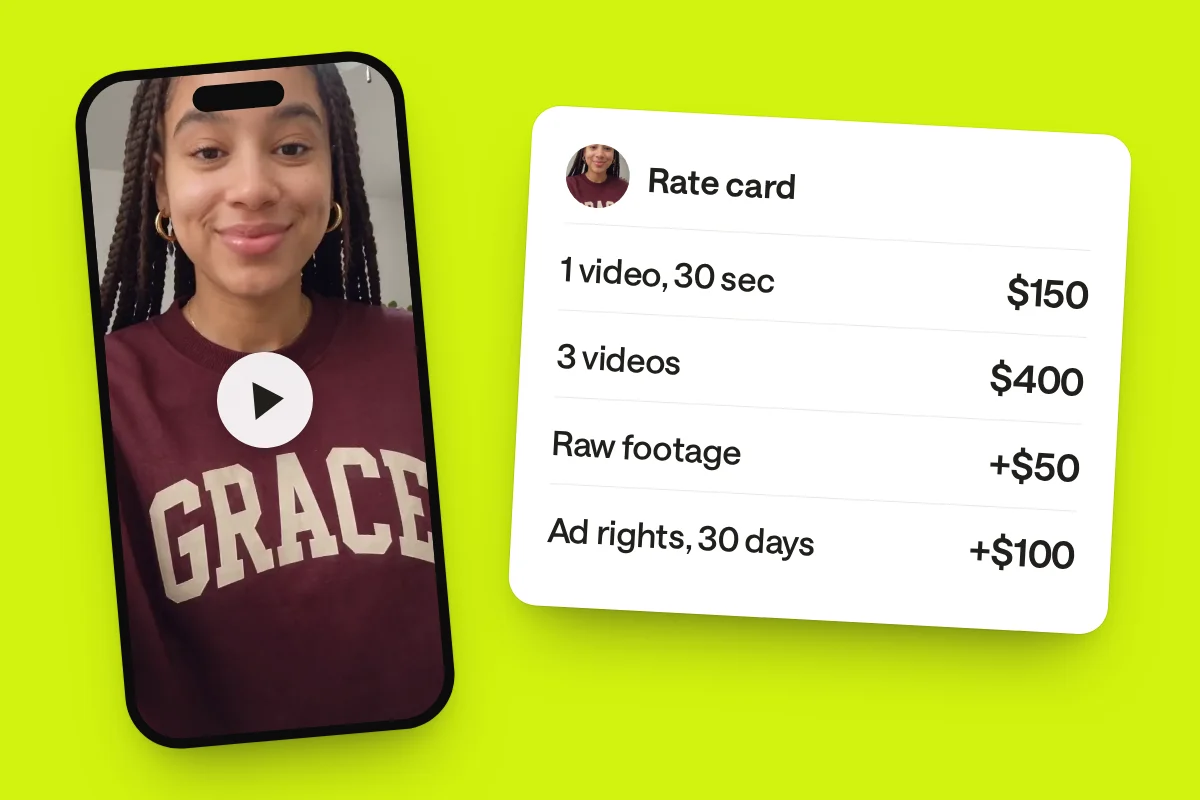
Typical UGC rates per video
UGC means user-generated content: short videos made by everyday creators that look like a customer's post. The three rate guides below all land in the low hundreds of dollars for one video, with a long tail above that.
- Influee (April 2025): the average single UGC video falls between $150 and $212, with a median around $175. Beginners may start around $100, while seasoned pros charge $500 or more.
- inBeat (2022 survey, cited in its August 2026 guide): an average asking price of $212 and a median of $150 in the 2022 Brands Meet Creators survey, which asked creators for the fee on one vertical video of 15 to 60 seconds. inBeat notes the average is pulled up by well-known creators.
- Insense (September 2026): beginners at $50 to $400, mid-level creators at $150 to $1,000 and premium creators at $500 to $3,000 or more. Its Instagram Reels range runs from $125 to $300 at the low end up to $500 to $1,250.
inBeat calls the median the most commonly requested rate, so use it as your planning number.
What raises the price
Treat a creator's quote as the base fee for one video. Add-ons stack on top. Influee's 2025 guide lists these typical charges:
- Usage rights (permission to run the video as a paid ad): 30% to 50% of the base rate.
- Whitelisting (running ads from the creator's own account): 30% of the base rate per month.
- Raw footage (the unedited clips): 30% to 50%.
- Extra hooks (alternate opening lines to test): $50 each.
- Rush delivery: 25% to 50%.
Insense's 2026 guide adds production complexity, like a second person or an unusual location, and scarce niches to the list of things that raise rates.
Worked example
Example: a candle shop books one video at a $175 base. Ad usage rights at 40% add $70. Two extra hooks add $100. The total comes to $345 for one video with three openings to test. Write your hooks before you brief the creator. Our UGC ad scripts and ad hooks guides have templates.
Whitelisting on Meta is now called partnership ads
Meta's partnership ad permissions page says branded content ads are now called partnership ads. The ad includes the creator's handle, and you need the creator's permission before you run it.
There are two kinds of permission:
- Content-level: covers one post, story or reel. The creator either turns on "Allow brand partner to boost" and tags you in the paid partnership label, or sends you a partnership ad code.
- Account-level: covers the creator's account more broadly and suits ongoing work. Creators can accept it in Partnership Ads Hub, the Instagram app or the Facebook app.
Creators can revoke either permission at any time. Insense notes that full account access costs more than approving a single boosted post, so ask for content-level first and upgrade once a video works.
Hiring through a platform or directly
Platforms find and pay creators for you. Going direct skips platform fees and costs you time.
- Pay-per-video platform: Billo's pricing page, checked in November 2026, says videos start at $99, for a 15-second video from a regular creator with basic editing. That price covers the creator fee, basic editing and platform fees, and leaves out your product and shipping it to the creator.
- Subscription platforms: Insense's 2026 guide puts self-serve creator platforms at around $400 to $500 a month plus marketplace fees, and fully managed production at roughly $440 per video all-in.
- Direct: no platform fee, but Insense notes the staff time is significant, and usage rights beyond a basic post get licensed separately.
If you hire directly, put the deliverables, the rights period, the number of revisions and the payment date in writing before filming starts. Our roundup of UGC platforms compares the main marketplaces.
Paying in free product
A product-only deal is a negotiation, and it still needs a written agreement on usage rights if you plan to run the video as an ad.
Disclosure applies too. The FTC's endorsement guide FAQ says receiving free products with the expectation of promoting them is a connection that can require disclosure, and that there is no threshold amount that applies in all situations. Ask creators who post about a gifted product on their own accounts to label it.
If you go product-only:
- Send the brief before the product, so the creator knows what to film.
- Agree in writing on the number of videos, the deadline and whether you can run them as ads.
- Pay for shipping yourself and include a return label if the product is expensive.
- Offer a paid upgrade for ad rights if the first video turns out well.
Where AI video fits in the budget
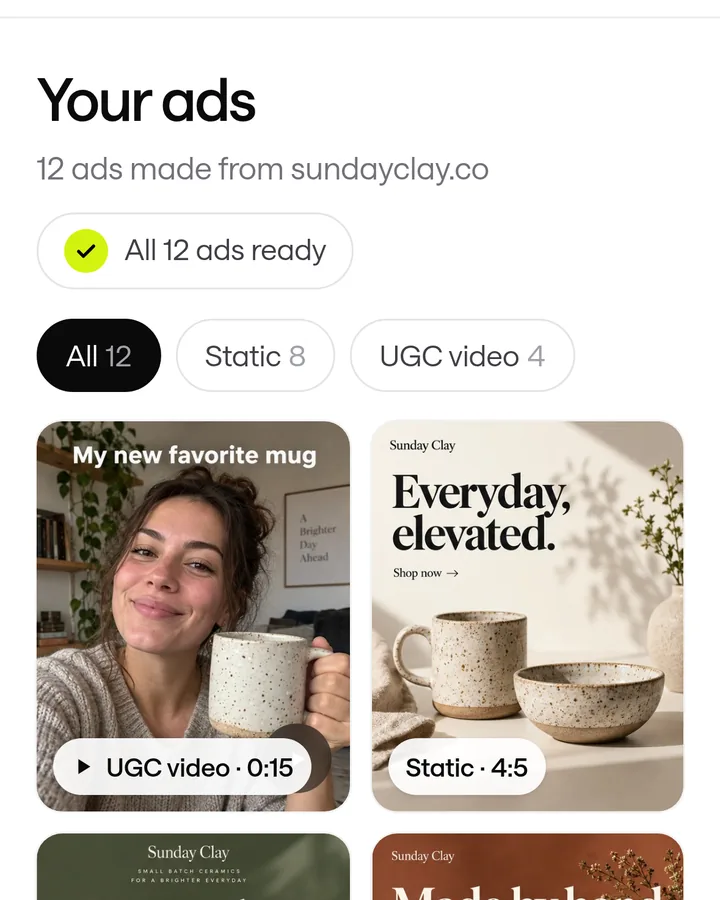
AI video lets you test many angles without a creator fee per clip. ScaleShot makes 4 to 10 second video ads from your product at 10 credits per second, and plans start at $19.95 for the first 2 weeks, then $42 every 2 weeks. A real customer's review is still worth buying when you want a true story on camera. See how to make UGC ads for both routes.
UGC pricing questions
Do UGC creators charge per video or per month?
Most creators quote per video. Agencies often bill a retainer instead: Insense's 2026 guide puts agency retainers at $2,000 to $10,000 or more a month, with mid-tier retainers delivering 8 to 20 finished videos.
How long do UGC usage rights last?
It depends on the contract. inBeat's guide uses 12 months as its example base period, with longer use costing extra.
Is it cheaper to order several UGC videos at once?
Often, yes. inBeat's worked example applies a 20% discount to a bundle of 10 videos, and Influee's 2025 guide lists 25% off each additional concept.
Who owns the video after I pay?
Whatever your contract says. Spell out where you can run the video, for how long, and whether you get the raw clips.
ScaleShot TeamWe build ScaleShot, an AI ad tool for small businesses on Facebook and Instagram. How we make our guides
Sources
- UGC Rates 2026: The Ultimate Guide With Real Numbers, Influee
- The Ultimate Guide to UGC Rates in 2026, inBeat
- UGC Creator Rates Explained: Real 2026 Pricing, Insense
- About Partnership Ad Permissions, Meta Business Help Center
- Billo pricing, Billo
- FTC's Endorsement Guides: What People Are Asking, Federal Trade Commission