How to get your first sales on Shopify
Make sure the store can take an order, then send it traffic you can measure, starting with Facebook and Instagram ads because they are the quickest to turn on. Expect few sales from little traffic: the median Shopify store in Littledata's October 2026 benchmark converts 1.3% of sessions. Add organic social, email and the Shop app alongside.

How much traffic a first sale takes
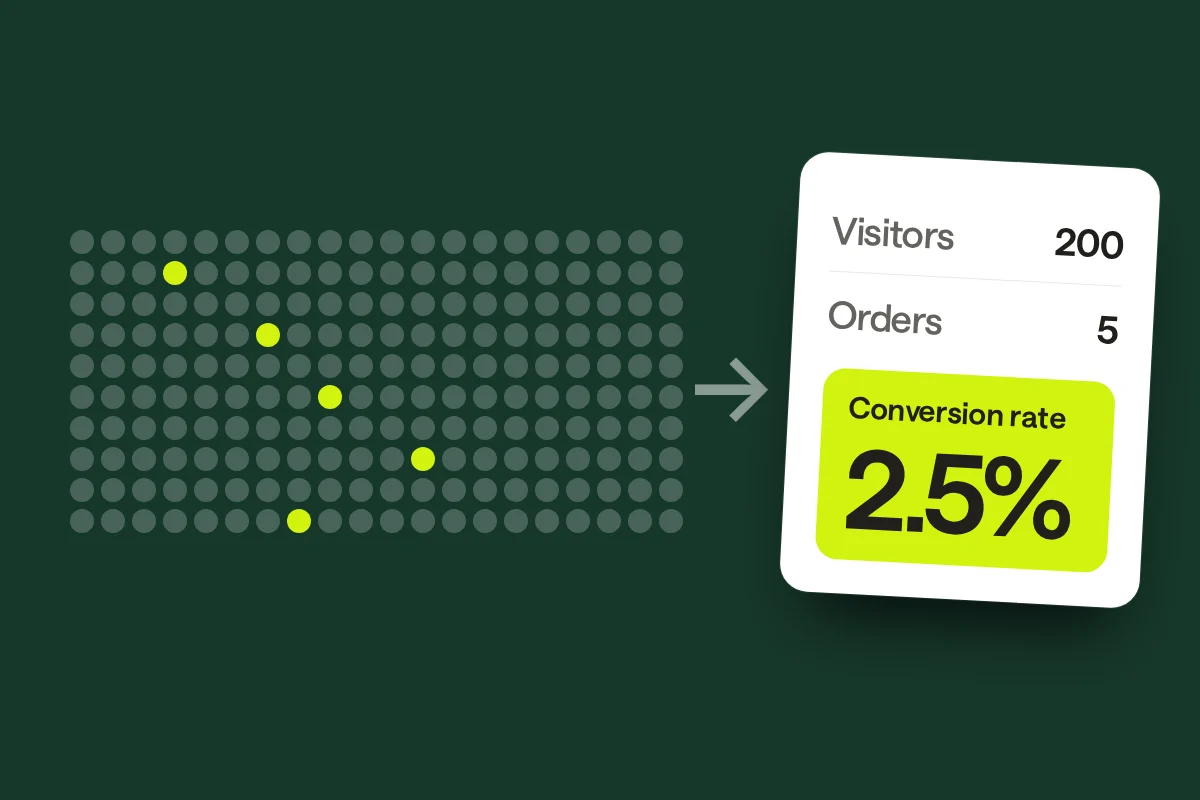
Start with the numbers, because they explain most quiet stores. Littledata's benchmark of 438 Shopify stores, covering August 3 to October 31, 2026, found a median conversion rate of 1.3%. The top 20% of stores convert above 2.7% and the top 10% above 3.6%. Shopify's own guide puts global averages around 2% to 3% and says to compare yourself with your product category. Selling on Etsy instead? See how to get sales on Etsy.
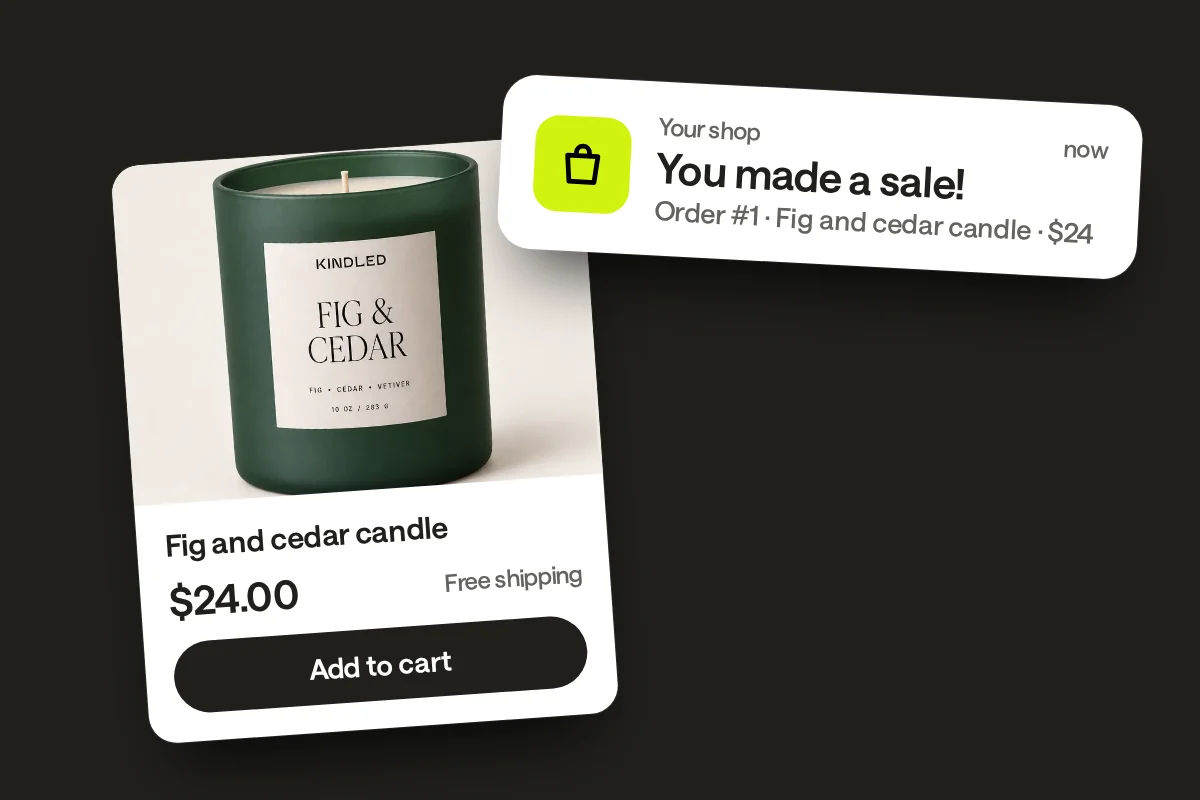
Example: a made-up candle shop got 40 visits last week and no orders. At the median rate, one order takes about 77 visits on average. Zero sales from 40 visits is normal, and the first job is more visitors.
Step 1: Check the store before you pay for traffic
Product pages
Each product page needs clear photos, the price, what the item is, sizes or options, and how it ships. Write the description for someone who has never heard of you.
Show shipping costs and delivery times early
Leaving out people who were just browsing, Baymard Institute's survey of US online shoppers found that 40% abandoned a cart because extra costs like shipping, tax and fees were too high, and 20% because delivery was too slow. Put the shipping price and delivery time on the product page so the checkout holds no surprises.
Give people reasons to trust you
19% left because they didn't trust the site with their card details, and 18% because the site required an account. Add a contact page, a clear return policy and reviews as they come in, and let people check out as guests.
Place a test order
Shopify's help center explains Shopify Payments test mode, which needs a paid Shopify plan:
- Go to Settings > Payments and click Manage in the Shopify Payments section.
- Under Test mode, select Enable test mode and click Save.
- Check out on your store with card number 4242 4242 4242 4242, any future expiry date, any 3-digit code and a two-word name.
- Turn test mode off afterward so real orders go through.
Step 2: Run Facebook and Instagram ads
Paid ads are the fastest way to get visitors to a new store, because you choose when they start. Meta says ad review is typically completed within 24 hours.
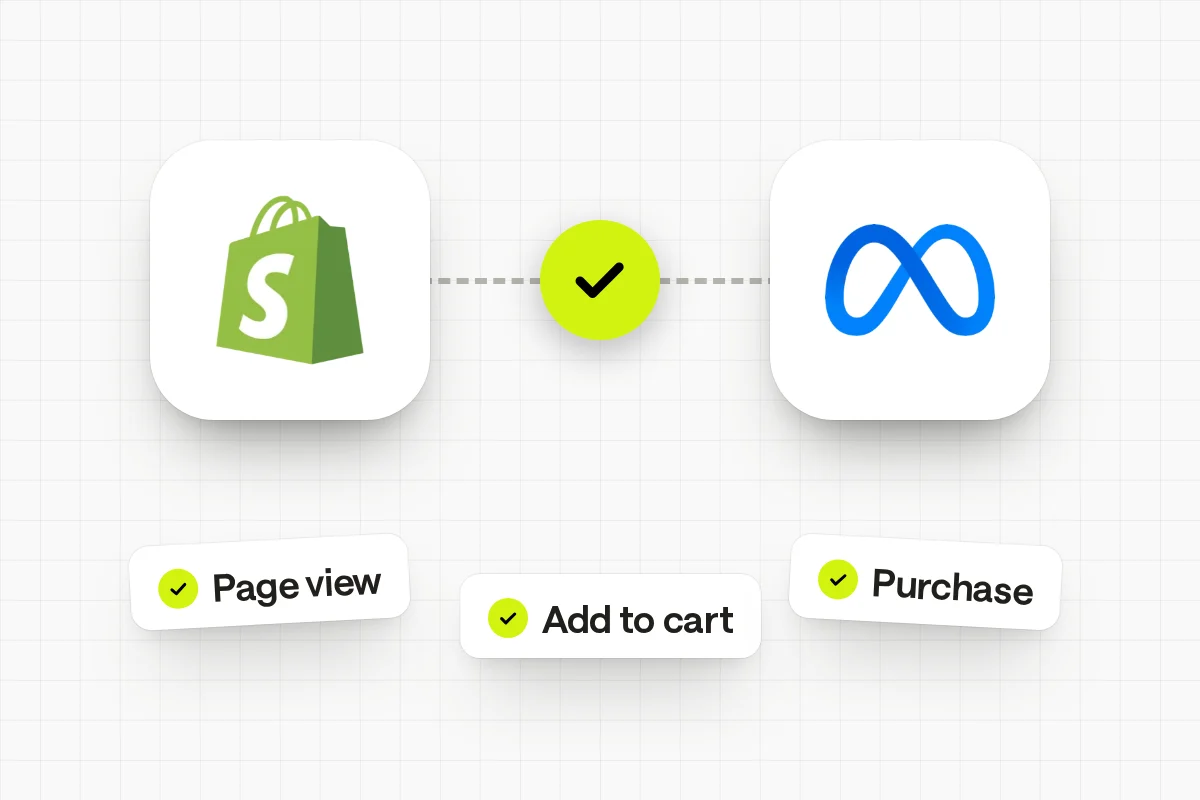
- Add the Meta pixel to Shopify so Meta can see purchases.
- Pick one or two products to promote, ideally your best seller or the one with the clearest photo.
- Make a few different ads for each product. Our guide on how to make an ad shows what to include.
- Set a daily budget you can afford to lose for a week. Our Facebook ads budget guide shows how to work it out.
- Let it run for a week before you judge it.
Example: a made-up dog treat brand spends $10 a day for 7 days, so $70 in total. Divide spend by orders at the end of the week to get cost per order, and compare it with your profit per order. For the full setup, see how to run Facebook ads.
Step 3: Post on social media
Organic posts cost nothing but grow slowly. Post the product in use, show how it's made or packed, and answer every comment. Put your store link in your profile. Use the same photos and short videos you made for ads, so one batch of content feeds both.
Step 4: Collect emails from day one
Shopify's built-in email tool, Shopify Messaging, includes 10,000 free emails at the start of every month on the Basic, Grow, Advanced and Plus plans. After that it costs $1 per 1,000 emails. Abandoned checkout emails are always free and don't count toward the monthly limit.
Turn on the abandoned checkout email, add a signup form to your store, and send a launch email to friends, family and past customers. Ask the first buyers for a review.
Step 5: Get listed in the Shop app
Shop is Shopify's shopping and delivery tracking app for iOS, Android and the web, available in countries where Shopify Payments is supported. Stores that meet Shopify's requirements are listed in Shop automatically. One requirement is at least one fulfilled order, so Shop starts to help after your first sale.
Handmade sellers can also list on marketplaces with their own shoppers. See our page for Etsy sellers.
What to track each week
- Sessions: how many visits you got, and from where.
- Conversion rate: Shopify Analytics reports it as online store conversion rate.
- Add to cart and reached checkout: where people drop off. Baymard's average cart abandonment rate across 50 studies is 70.22%, so most carts never become orders.
- Orders and cost per order: ad spend divided by orders from ads.
Compare one week with the next and change one thing at a time.
Where ScaleShot fits
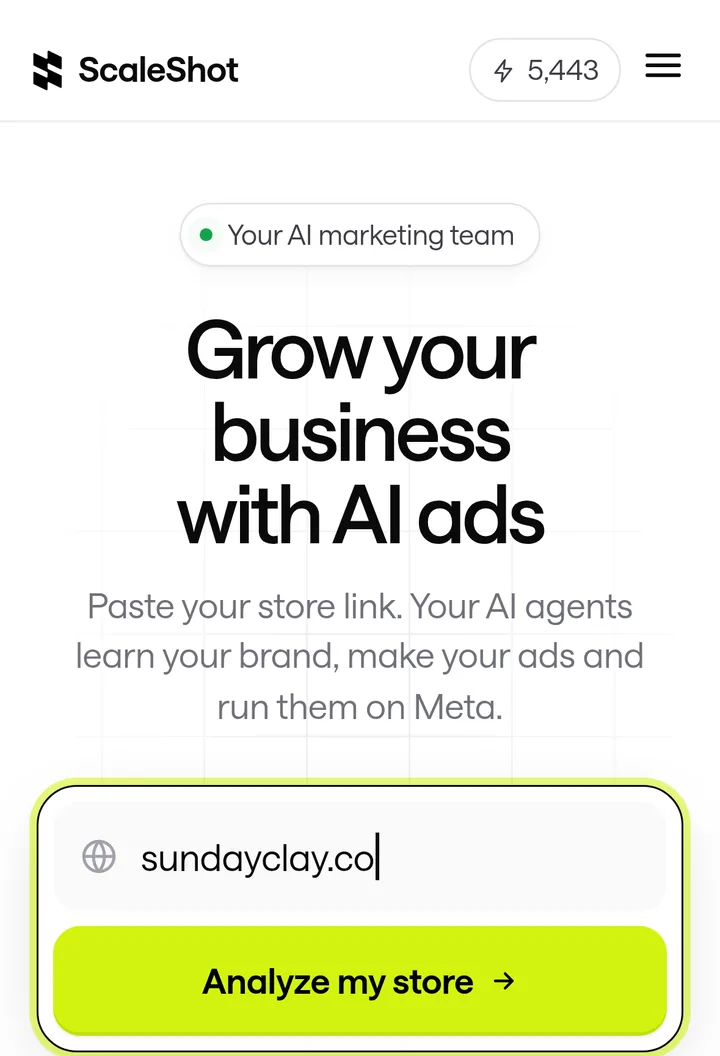
ScaleShot can often pull your brand identity straight from your website. Its Ads Agent makes image ads and 4 to 10 second video ads, writes plans, and with a connected Meta ad account launches Facebook and Instagram campaigns with a Sales goal. It covers Meta ads only. Social posts, email and the Shop app stay with you.
First Shopify sale questions
How long does it take to get the first sale on Shopify?
No source gives a reliable timeline, because it depends on how many people visit and how many of them buy. Track sessions and conversion rate weekly so you know which one to work on.
Is a 1% conversion rate bad for a new Shopify store?
It sits a little under the median in Littledata's benchmark, and only the top fifth of stores clear 2.7%. Compare it with stores in your own product category.
Why do people add to cart but not buy?
Leaving out people who were just browsing, the top reason in Baymard's survey was extra costs such as shipping, tax and fees. Show those costs on the product page and run a test order to see the checkout as a customer does.
Do I have to pay for ads to get sales?
No. Social posts, email and the Shop app cost little or nothing, but they build slowly. Ads are the quickest way to test whether people want the product. Our guide on whether Facebook ads are worth it shows the math.
ScaleShot TeamWe build ScaleShot, an AI ad tool for small businesses on Facebook and Instagram. How we make our guides
Sources
- Average ecommerce conversion rate (all devices), Littledata
- Ecommerce conversion rate, Shopify
- Cart abandonment rate statistics, Baymard Institute
- Testing Shopify Payments, Shopify Help Center
- Shop, Shopify Help Center
- Shopify Messaging email pricing, Shopify Help Center
- Introduction to the Advertising Standards, Meta Transparency Center
- Requirements to display and sell products on Shop, Shopify Help Center