Facebook ads bid strategies, explained
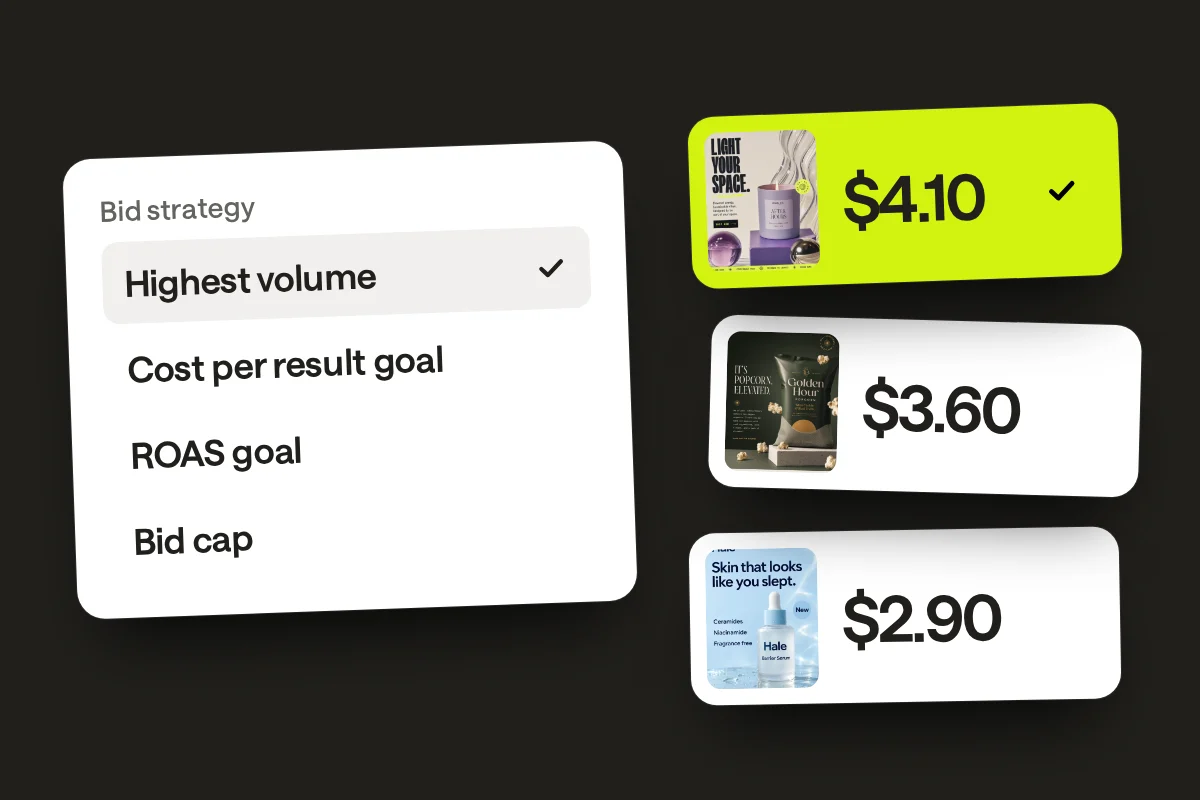
On a small budget, use Highest volume. It is the default for most goals and aims to get as many results as your budget can buy. Cost per result goal, ROAS goal and bid cap add limits that can leave part of your budget unspent, so save them until you know your real costs.

How the Facebook ad auction picks a winner
Every time Meta has a spot to show an ad, it runs an auction, and billions happen every day. The ad with the highest total value wins. Meta's About ad auctions page lists three parts of total value:
- Your bid: what you are willing to pay for that ad.
- Estimated action rate: Meta's guess at whether this person will engage or convert from this ad.
- Ad quality: based on feedback such as people hiding the ad, and on signs of low quality like withheld information, sensational wording and engagement bait.
The part that matters for a small shop: an ad that is more relevant to a person can beat ads with higher bids. Meta also says auction adjustments won't charge you more than your bid.
The five Facebook bid strategies
Meta groups bidding into three types: spend-based, goal-based and manual. Here is what each strategy does, in Meta's words from its bid strategies page:
Spend-based
- Highest volume: gets as many results as your budget can buy. It gives you no control over cost per result.
- Highest value: spends your budget while aiming for the purchases worth the most. Loomer says it suits stores with a deep catalog and a wide spread of prices.
Goal-based
- Cost per result goal: you set a target average cost, and Meta tries to get as many results as it can near that cost. Meta notes it doesn't guarantee the target.
- ROAS goal: you set a target return on ad spend (ROAS, sales revenue divided by ad spend), and Meta aims to stay near it on average.
Manual
- Bid cap: sets the most Meta can bid in any single auction, and it never goes above that amount. Meta says it is meant for advertisers who understand their predicted conversion rates well.
Which bid strategy a small budget should use
Start with Highest volume. Jon Loomer, who teaches Meta advertising, says it is the default for most performance goals and that he uses it about 90% of the time. He adds that for newer advertisers it will almost always be the recommended approach.
Why it fits a small account:
- It spends your money. Goal-based and manual strategies can leave budget unspent. Meta's developer docs warn that a cost cap may not spend the full budget once it hits the cap, and a ROAS target set too high may under-deliver.
- Goal-based bidding wants volume. Meta recommends 50 to 100 or more conversions a week for those strategies. A shop getting a few sales a week is far below that.
- You don't have a number yet. A cost goal needs a cost you can defend. Loomer's advice is to run without one first and find your average cost per result.
If you sell a mix of cheap and pricey items and track purchase values with your Meta pixel, Highest value is worth a test once you have steady sales.
When to switch to a cost or ROAS goal
Switch when costs swing too much and you know what you can afford. Meta suggests running Highest volume or Highest value first to set a baseline.
A worked example. Say a dog treat brand ran Highest volume for a month and averaged $25 per purchase. Its profit per order is $30, so anything over $30 loses money. Here is how it would add a goal:
- Duplicate the campaign so the original keeps running and you can compare the two.
- Choose Cost per result goal.
- Set the target a little above the recent average. Meta's own example is 10% to 20% above your recent average cost per acquisition, so $27.50 to $30 here.
- Leave it alone and judge it on a weekly average. Meta adjusts bids above and below the target over the week.
Watch spend. When competition rises, Meta keeps to your target before it looks for more results. Loomer warns that if you set the goal too aggressively, your budget won't spend. If the campaign stalls, raise the target or go back to Highest volume.
For the ROAS version of this math, see what a good ROAS is and break-even ROAS.
Bid strategy mistakes to avoid
- Using a bid cap to save money. Loomer says only the most advanced advertisers should bother with bid caps.
- Bidding lower on your best audience. Meta says this doesn't make your spend more efficient and suggests setting a goal at the most you can afford.
- Setting a target from a guess. A cost goal below what results cost now can leave budget unspent.
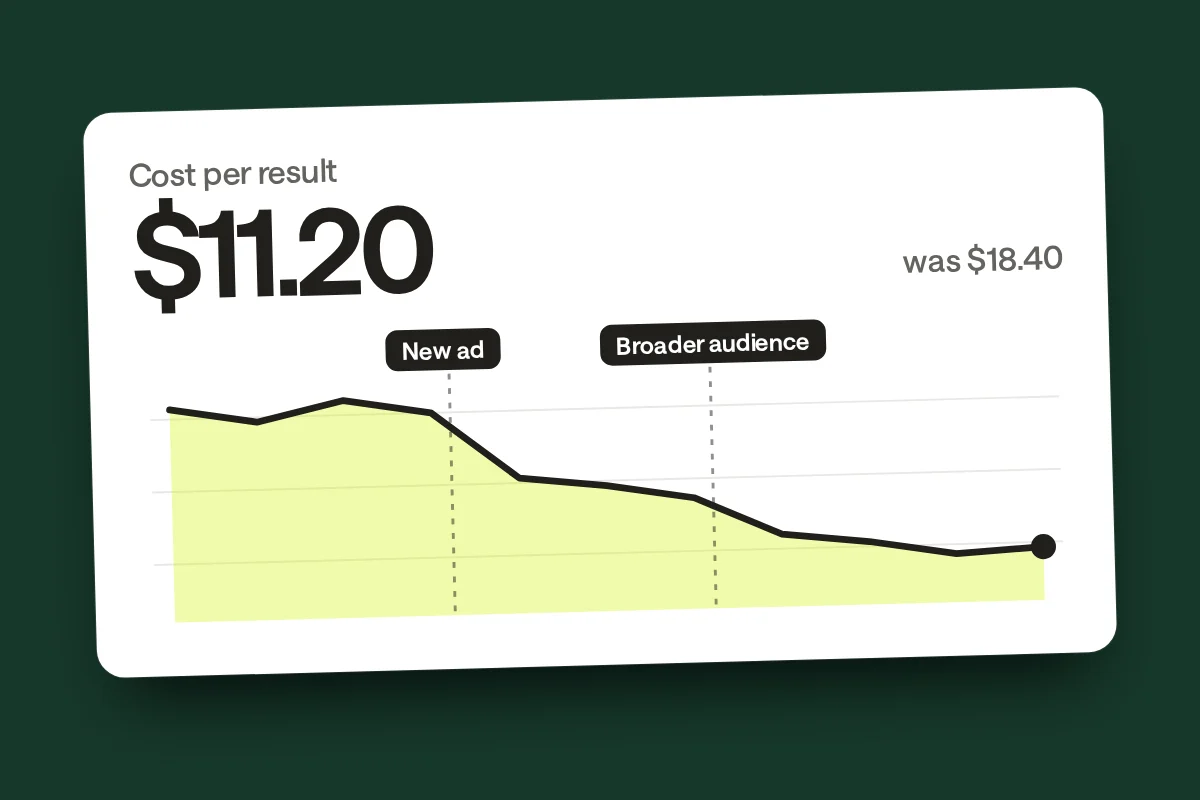
- Blaming the bid for a weak ad. Ad quality and estimated action rate are part of every auction. If costs are high, our guide to lowering Facebook ad costs starts with the creative.
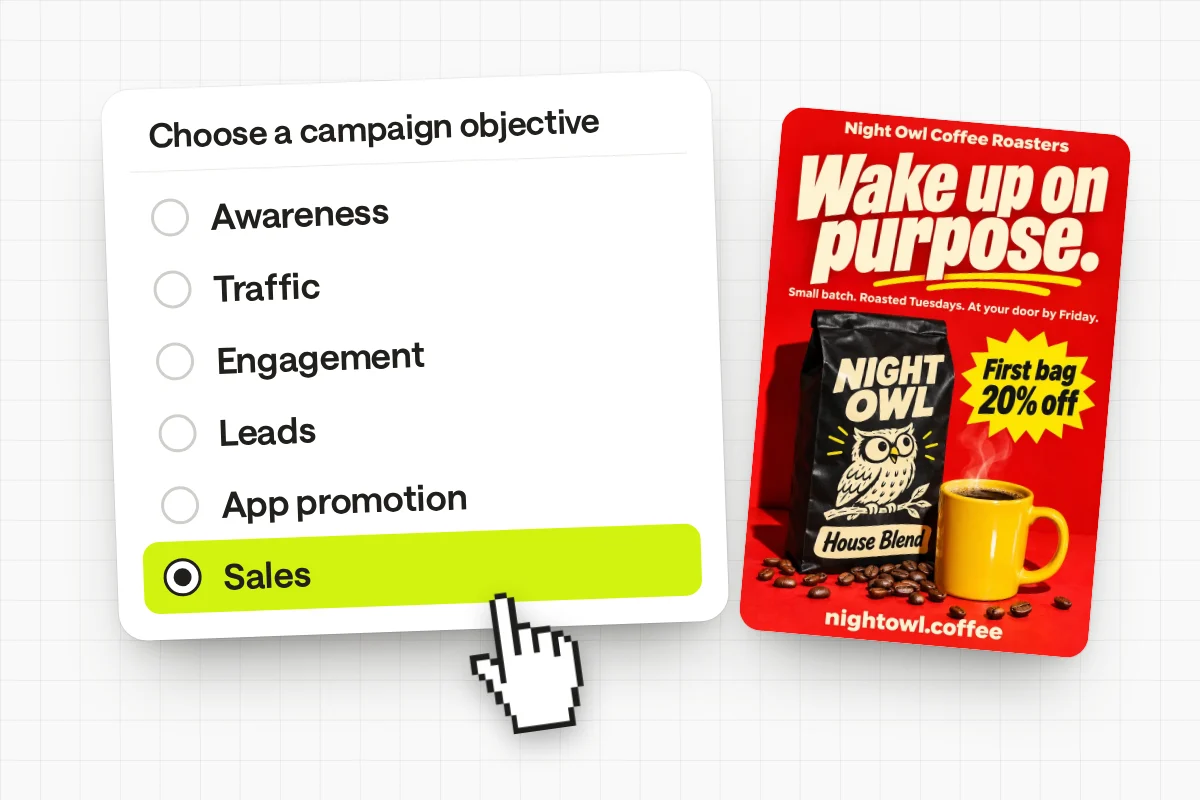
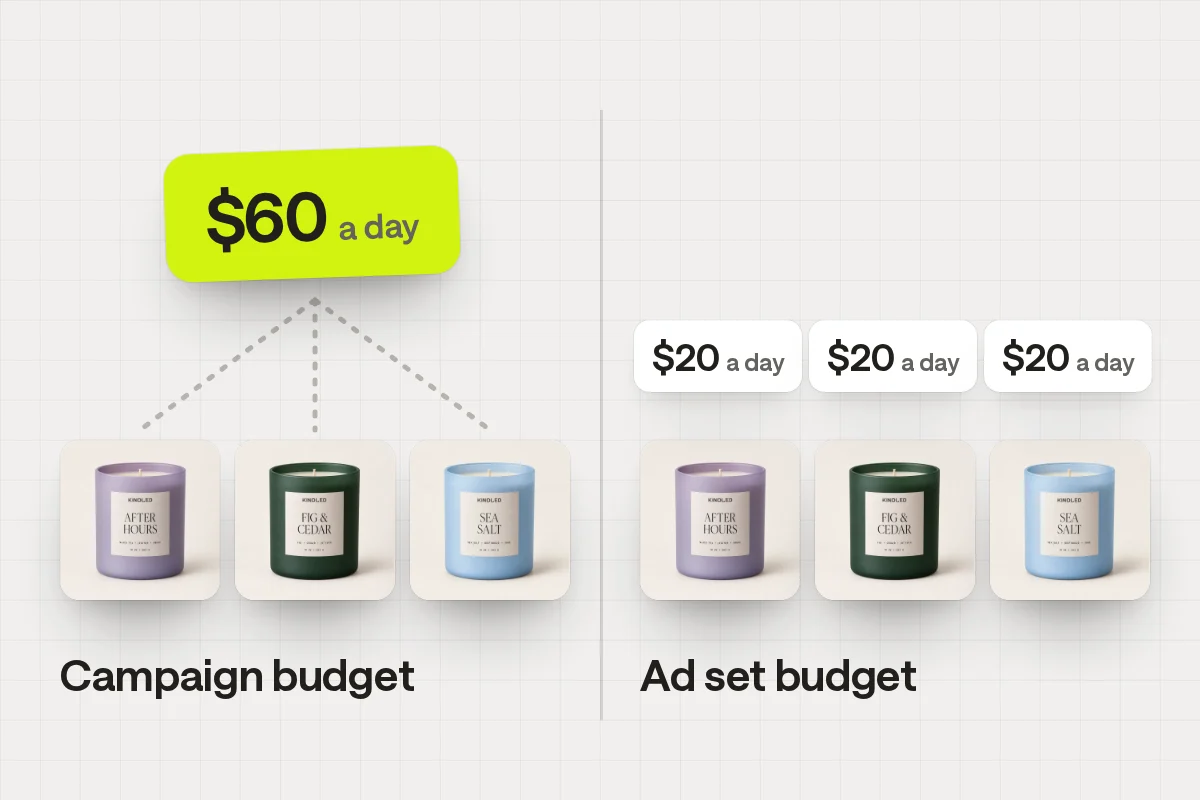
New to the setup? The Facebook campaign objectives guide covers the step before this one, and CBO vs ABO covers where the budget sits.
Bidding and budgets in ScaleShot
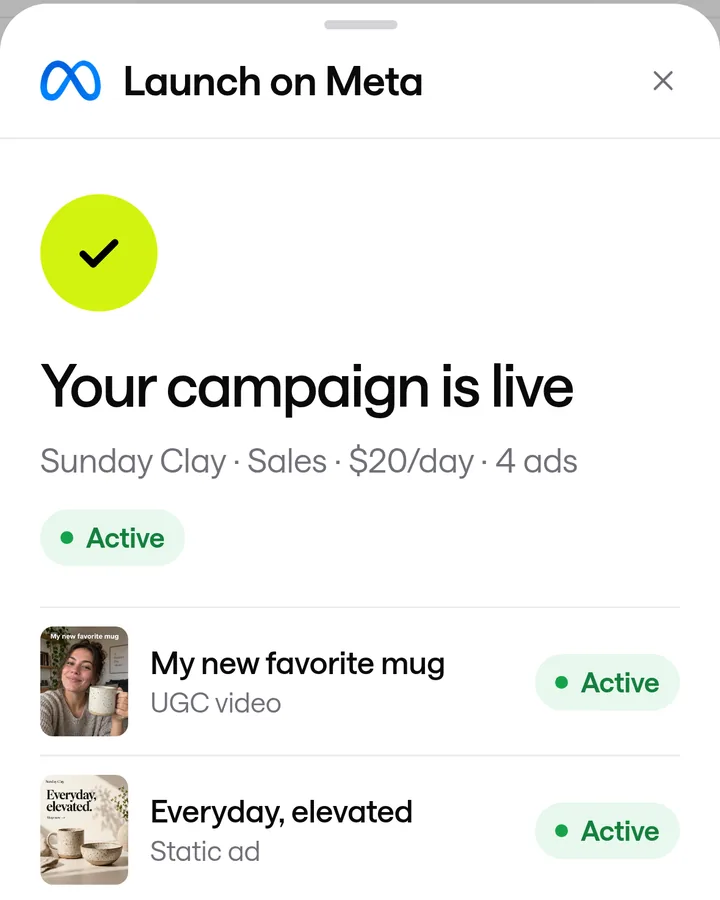
When you launch a campaign from ScaleShot, you set a daily budget of at least the minimum shown and can add an end date. Once it runs, you can ask the Ads Agent how your ads are doing, and it can pause ads or change budgets, always asking you before it changes anything.
Facebook bid strategy questions
What is the default bid strategy on Facebook?
Highest volume is the default for most performance goals, according to Jon Loomer. Meta's developer docs list it under the name LOWEST_COST_WITHOUT_CAP.
Is cost per result goal the same as cost cap?
Yes. Ads Manager calls it cost per result goal, and Meta's developer docs still call it a cost cap. Either way the target is an average and isn't guaranteed.
Why is my cost per result goal campaign not spending?
The target is likely below what results cost right now. Meta's docs warn a cost cap may not spend the full budget once it hits the cap. Raise the target or switch back to Highest volume.
Can I use different bid strategies in one campaign?
Not with one campaign budget. Meta says each campaign uses a single bid strategy, so you'd make a separate campaign.
ScaleShot TeamWe build ScaleShot, an AI ad tool for small businesses on Facebook and Instagram. How we make our guides
Sources
- About Ad Auctions, Meta Business Help Center
- About Meta Bid Strategies, Meta Business Help Center
- Bid Strategy (Marketing API), Meta for Developers
- Bid Strategies: Best Practices for Meta Advertising, Jon Loomer Digital